Small Window Air Conditioner: The Ultimate Buying Guide for Compact Cooling Solutions
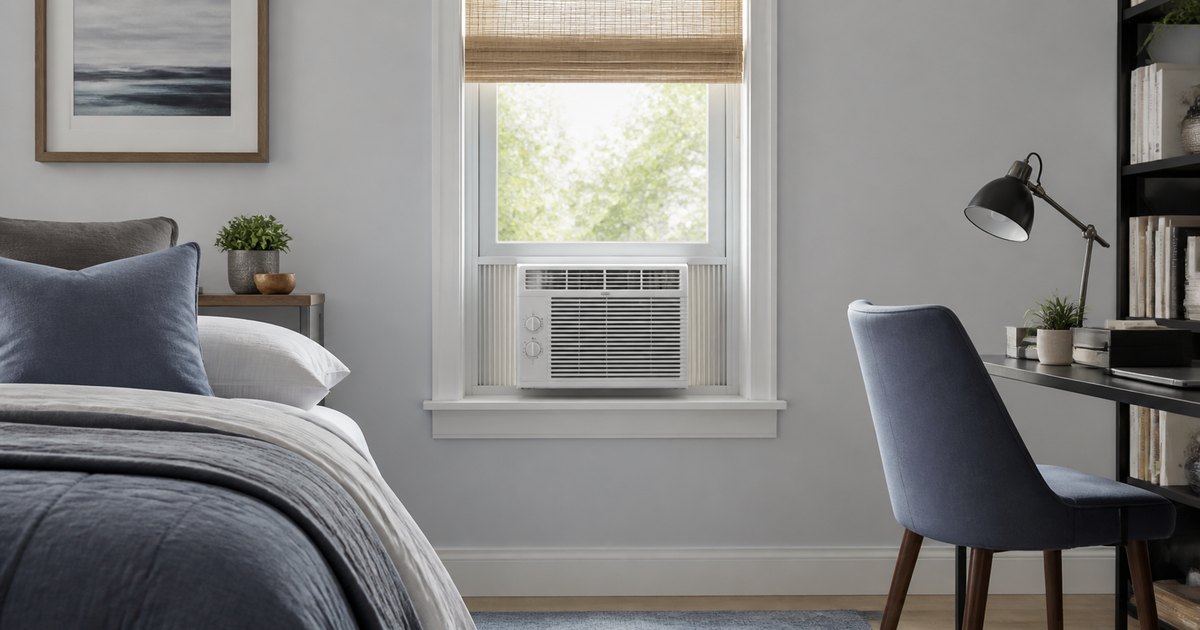
When summer heat presses against your walls like a relentless tide, not every space demands a massive cooling system roaring at full throttle. Sometimes what you need isn’t brute strength. It’s calibration. Restraint. Strategic cooling that understands the dimensions of your life.
That’s where a small window air conditioner earns its place.
Compact yet capable, understated yet effective, these units are engineered to cool efficiently without overwhelming your space — or your electricity bill. Whether you’re outfitting a dorm room, a modest bedroom, a studio apartment, a converted attic, or a focused home office, the right small AC unit can transform stifling air into breathable comfort within minutes.
But choosing one isn’t as simple as picking the lowest price tag or the highest BTU rating. Cooling is physics. It’s airflow dynamics. It’s an insulation interplay. It’s electrical capacity. And yes — it’s lifestyle compatibility.
This guide walks you through every meaningful variable so you don’t just buy a unit.
You buy the right one.
What Is a Small Window Air Conditioner?
A small window air conditioner is a self-contained cooling system designed to fit within standard single- or double-hung windows while delivering efficient cooling for compact spaces. These units function independently, unlike split systems, which require expert installation, or central air systems, which depend on ducting. Everything — compressor, condenser, evaporator — lives inside one compact metal chassis.
Most small window AC units range from 5,000 to 8,000 BTUs, making them ideal for rooms between 100 and 350 square feet. They plug into standard 115V household outlets and typically require minimal structural modification beyond secure window mounting.
But “small” doesn’t mean weak.
These units are engineered for targeted performance. In fact, when properly sized, a small window air conditioner can cool a confined space faster and more efficiently than a larger unit improperly matched to the room. Precision cooling prevents wasted energy, stabilizes humidity levels, and avoids temperature swings.
It’s not about size alone.
It’s about proportional design.
Why Choose a Small Window AC Unit?
There is a temptation to oversize appliances — to assume more power guarantees better results. But in air conditioning, excess capacity often creates inefficiency. A unit that’s too large cools the air rapidly, shuts off prematurely, and fails to remove adequate moisture. The room feels cool… but damp. Heavy. Slightly uncomfortable.
A small window air conditioner, when properly matched to the room’s square footage, maintains longer cooling cycles. This stabilizes humidity. It creates consistent airflow. It enhances comfort.
Financially, the benefits compound. Smaller units cost less upfront. They consume fewer watts per hour. They place less strain on your electrical circuits. For renters or individuals living in older buildings with limited power capacity, this matters significantly.
Then there’s installation simplicity. A compact AC unit is lighter, easier to mount, and less structurally demanding. You’re not wrestling with industrial equipment. You’re installing a purpose-built solution for a defined environment.
Sometimes efficiency is power — refined.
Choosing the Right BTU Size
The amount of heat an air conditioner can remove from an area in an hour is measured in British Thermal Units (BTUs). It’s a straightforward metric — but selecting the right capacity requires more than glancing at square footage charts.
Yes, a 5,000 BTU unit typically cools 100–150 square feet. An 8,000 BTU unit can manage up to 350 square feet. But variables complicate the equation.
Does the room receive intense afternoon sunlight?
Are the ceilings higher than 8 feet?
Is the insulation outdated?
How many occupants regularly use the space?
Each factor increases heat load.
Oversizing leads to short cycling. Undersizing forces the unit to run continuously, increasing wear and driving up electricity costs.
The goal is balance.
Cooling should feel steady, not abrupt. Consistent, not strained. When BTU output aligns with environmental demand, the unit operates within its optimal efficiency range — extending its lifespan and maximizing comfort.
Precision sizing isn’t optional.
It’s foundational.
Key Features to Look for in a Small Window Air Conditioner
Choosing a small window AC unit involves more than cooling capacity. Modern models integrate features that influence comfort, convenience, and long-term efficiency. Some enhance daily usability. Others protect your investment over time.
Air direction controls allow you to redirect airflow where it’s needed most — upward for circulation, sideways for balance. Multiple fan speeds give you control over noise and cooling intensity. Sleep modes gradually adjust temperature overnight to prevent excessive chill while conserving energy.
Filter access design also matters. Units with front-access washable filters simplify maintenance and encourage regular cleaning, both of which directly affect airflow quality and efficiency.
Then there are digital displays, remote controls, programmable timers, and auto-restart functions after power outages. These may seem secondary — until you rely on them.
Features alone don’t define cooling performance.
But they shape the experience.
And comfort is experiential.
Energy Efficiency (EER & CEER Ratings)
Energy efficiency isn’t just about reducing your power bill — though that’s a compelling reason. It’s also about operational sustainability and long-term performance stability.
The Energy Efficiency Ratio (EER) measures how effectively a unit converts electrical power into cooling output. CEER, or Combined Energy Efficiency Ratio, goes further by factoring in standby power consumption.
Higher ratings signal better efficiency.
For small window air conditioners, look for CEER ratings above 11 and, when possible, Energy Star certification. These models are engineered to optimize compressor cycling, fan motor performance, and refrigerant management.
Efficiency affects more than cost. It influences heat exchange stability and component stress. A well-designed, efficient unit runs more smoothly. Quieter. Cooler internally.
Over time, that matters.
The difference between marginal and superior efficiency may only save a few dollars per month — but across multiple cooling seasons, the cumulative savings become meaningful.
Efficiency isn’t flashy.
It’s quietly powerful.
Noise Levels
Noise is often underestimated during the buying process. On paper, 55 decibels doesn’t seem excessive. In practice, that steady mechanical hum can disrupt sleep, interrupt concentration, and subtly erode comfort.
Small window air conditioners vary significantly in acoustic performance. Entry-level units often operate between 55 and 60 decibels. Premium models can dip into the low 40s on reduced fan settings.
That difference feels substantial at night.
Noise output depends on the compressor and fan blade designs, chassis insulation, and vibration control mechanisms. Some models incorporate inverter technology, which allows gradual compressor modulation rather than abrupt on/off cycling — dramatically reducing noise fluctuations.
If installing in a bedroom or office, prioritize low decibel ratings. Consider units advertising “quiet mode” or “sleep mode.”
Cooling should soothe.
Do not compete for attention.
Silence enhances comfort as much as temperature control does.
Smart Controls & Connectivity
The modern small window air conditioner isn’t just mechanical — it’s digital. Smartphone app control, remote scheduling, and integration with voice assistants like Alexa or Google Assistant are now possible with Wi-Fi-enabled devices.
Is this necessary? Not strictly.
But convenience compounds over time.
Imagine leaving work on a hot afternoon and activating your AC remotely so your room is perfectly cooled upon arrival. Or program the unit to power down automatically after you fall asleep, conserving energy without sacrificing comfort.
Smart controls also provide energy usage tracking in some models, helping you monitor consumption patterns.
When applied thoughtfully, technology doesn’t complicate cooling. It refines it.
Still, simplicity has its appeal. If connectivity isn’t valuable to your routine, manual controls suffice. The key is alignment between feature set and lifestyle — not blind adoption of digital trends.
Comfort should be intuitive.
Not complicated.
Installation Compatibility
Before purchasing a small window air conditioner, measure twice. Possibly three times.
Window width, height clearance, sill depth — each dimension matters. Most units are designed for standard double-hung windows, but casement or sliding windows may require specialized solutions.
Electrical compatibility is equally important. Most small units operate on 115V circuits, but older homes with overloaded lines can trip breakers if multiple appliances share the same outlet.
Installation angle matters too. The unit should tilt slightly outward to facilitate drainage of condensation. Poor leveling can lead to water leakage inside your room — a preventable frustration.
Use foam insulation strips to seal gaps. Install support brackets if required by weight guidelines.
A properly installed AC unit performs efficiently, drains correctly, and operates safely.
Improper installation compromises everything.
Precision at setup determines performance for years to come.
Best Use Cases for a Small Window Air Conditioner
Small window AC units excel in environments where targeted cooling is more practical than whole-home solutions.
Dorm rooms benefit from compact efficiency without overwhelming the limited electrical capacity. Studio apartments, often with open layouts, can maintain a consistent temperature with an 8,000 BTU unit strategically placed.
Bedrooms without central air — particularly in older homes — gain localized nighttime cooling without expensive ductwork upgrades. Home offices, where electronics generate residual heat throughout the day, remain comfortable and productive.
Even tiny homes and RVs rely on proportional cooling solutions. Space constraints demand equipment that respects square footage.
The key is environmental alignment.
These units are not designed to cool entire multi-room homes. They’re optimized for controlled, contained spaces.
When used appropriately, they outperform oversized alternatives in both efficiency and comfort stability.
Right tool. Right space.
Benefits and Drawbacks of Compact Window Air Conditioners
No cooling solution is flawless.
On the positive side, small window AC units are affordable, accessible, and energy-efficient for their intended coverage area. They install relatively easily, require no permanent ductwork, and offer quick cooling response.
They are renter-friendly and removable.
However, limitations exist. They block part of your view of the window. Exterior compressor noise may be noticeable outdoors. In colder climates, seasonal removal may be necessary to prevent drafts.
And importantly, they cool only one room effectively.
Understanding trade-offs prevents mismatched expectations. These units excel when cooling needs are localized. Expecting whole-home performance invites disappointment.
Clarity of purpose ensures satisfaction.
Energy Costs: What to Expect
Energy consumption varies by BTU capacity and usage duration. A 5,000 BTU unit typically draws around 450–500 watts per hour. Running 8 hours daily translates to roughly 4 kWh per day.
Depending on local electricity rates, monthly operating costs often range between $15 and $40 during peak summer.
Eco mode and programmable timers reduce runtime. Proper insulation minimizes workload. Clean filters enhance airflow efficiency.
Energy costs are not fixed. They respond to maintenance habits and environmental factors.
Cooling efficiently is a partnership between equipment and user behavior.
Installation Tips for Maximum Performance
Beyond basic mounting, performance optimization requires detail.
Ensure a slight outward tilt for proper drainage. Seal side panels tightly to block hot air intrusion. Inspect insulation around the window frame.
Clean filters monthly. Dust accumulation restricts airflow, forcing the unit to work harder.
Check coils seasonally. Remove debris from exterior vents.
Small habits preserve long-term efficiency.
Small Window AC vs Portable Air Conditioner
Portable air conditioners offer flexibility but sacrifice efficiency. Dual-motor operation often increases noise and energy use. Exhaust hoses vent hot air outside, but negative air pressure can draw warm air back into the room.
Window AC units, by contrast, vent heat externally without creating an internal pressure imbalance. They’re generally quieter and more energy-efficient.
If window installation is possible, small window AC units usually provide superior cooling per watt.
Mobility favors portable units. Performance favors window units.
Choose based on structural limitations and cooling priorities.
Comparison Table: Small Window Air Conditioner Size Guide
Below is a simplified comparison chart to help buyers quickly match room size with appropriate specifications.
|
Feature |
5,000 BTU Unit |
6,000 BTU Unit |
8,000 BTU Unit |
|
Ideal Room Size |
100–150 sq ft |
150–250 sq ft |
250–350 sq ft |
|
Estimated Watt Usage |
450–500W |
500–600W |
650–750W |
|
Average Noise Level |
50–57 dB |
50–55 dB |
45–55 dB |
|
Best For |
Dorm rooms, small bedrooms |
Medium bedrooms, offices |
Studio apartments, large bedrooms |
|
Estimated Monthly Cost* |
$15–$30 |
$20–$35 |
$25–$40 |
*Costs vary by electricity rates and daily usage.
This table provides directional guidance. Always adjust for sun exposure, ceiling height, and occupancy.
Frequently Asked Questions
What is the smallest window air conditioner available?
Most manufacturers start at 5,000 BTUs, which is suitable for rooms around 100–150 square feet. Some ultra-compact models are specifically designed for narrow windows and tight installations, but 5,000 BTU remains the industry baseline for small units.
How much electricity does a small window air conditioner use?
A typical 5,000 BTU unit uses approximately 450–500 watts per hour. If operated 8 hours daily, monthly costs often range between $15–$40, depending on local electricity rates and efficiency rating.
Can a small window AC cool multiple rooms?
Not effectively. Small window air conditioners are designed for single-room cooling. Airflow does not circulate evenly through hallways or closed doors. For multi-room cooling, multiple units or a larger system are required.
Are small window air conditioners noisy?
Noise levels vary. Budget units may operate around 55–60 decibels, while premium models with inverter technology can run as low as 42–50 decibels. Always check manufacturer specifications before purchasing.
Do small window air conditioners require professional installation?
No. Most units are designed for DIY installation using included mounting kits. However, proper leveling, sealing, and support are critical for safe and efficient operation.
Is a small window air conditioner better than a portable AC?
In most cases, yes. Window units are typically more energy-efficient, quieter, and more powerful per watt than portable air conditioners. Portable units are better suited for situations where window installation is not possible.
Conclusion
A small window air conditioner represents intentional cooling. It respects scale. It honors proportion.
It doesn’t attempt to dominate your home’s climate. It cools precisely where needed — efficiently, quietly, and economically.
In a world that often equates bigger with better, there’s wisdom in selecting equipment that matches your environment rather than overwhelms it.
When chosen carefully and installed properly, a small window air conditioner isn’t just an appliance.
It’s strategic comfort.