Horizontal Sliding Window Air Conditioner: The Complete Buyer’s Guide for Smart, Efficient Cooling
Not every window is compatible with a standard air conditioner. Some resist it. Some reject it entirely.
If your home features horizontal sliding windows, you already know this subtle architectural difference can turn a simple summer purchase into a frustrating puzzle. Traditional window air conditioners are engineered for vertical sash windows — wide openings, bottom-up sliding panels, predictable support brackets.
But horizontal sliders? They create tall, narrow gaps. And that changes everything.
A horizontal sliding window air conditioner isn’t just a variation of a traditional unit. It’s a purpose-built cooling solution designed to match the geometry, airflow patterns, and structural realities of sliding or casement windows.
In this comprehensive guide, we’ll explore design differences, installation nuances, sizing strategy, energy efficiency, brand comparisons, maintenance practices, and practical buying considerations — all so you can make an informed, confident decision.
Let’s begin where most buyers should: understanding what makes these units fundamentally different.
What Is a Horizontal Sliding Window Air Conditioner?
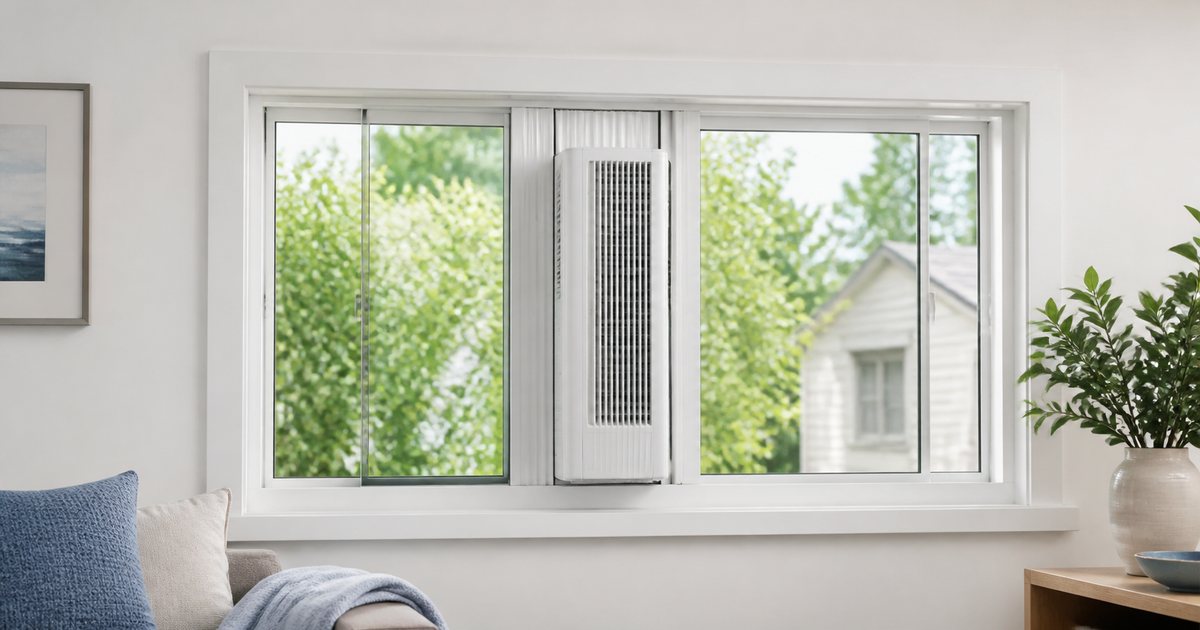
A horizontal sliding window air conditioner — often referred to as a casement window air conditioner — is a vertically oriented cooling unit specifically engineered to fit narrow window openings created by sliding or crank-style windows.
Unlike traditional window AC units that are short and wide, these models are tall and slim. That vertical form factor isn’t cosmetic; it’s structural. It allows the unit to securely fit into a window opening that measures significantly taller than it is wide.
Internally, the mechanics remain similar to other window units. Refrigerant cycles through coils. Warm indoor air passes over evaporator coils, cooling before being circulated back into the room. Heat is expelled outdoors through condenser coils.
But the airflow channels, vent orientation, and mounting hardware are adapted for vertical installation. That distinction ensures proper drainage, balanced weight distribution, and stable anchoring.
Without this specialized configuration, cooling efficiency suffers. Stability weakens. Energy consumption increases.
Design matters. Shape dictates performance.
Why Standard Window AC Units Don’t Work
At first glance, you might assume a standard air conditioner could simply be “adjusted” to fit a horizontal sliding window. Many homeowners attempt exactly that. And nearly all encounter problems.
Traditional window AC units depend on a wide sill and balanced weight resting horizontally across the lower frame. Horizontal sliding windows create a tall vertical gap instead. When you try to force a traditional unit into that space, you introduce instability.
Improvised panels leave air gaps. Foam inserts fail over time. The unit may tilt improperly, affecting drainage and compressor efficiency. In worst-case scenarios, the AC becomes a safety hazard — either slipping and causing injury or compromising window security.
Beyond structural concerns, airflow dynamics also change. Traditional units are optimized for specific orientation and gravity-assisted drainage. Rotating or reconfiguring them disrupts internal mechanics.
The result? Higher energy use. Reduced lifespan. Frustration.
A horizontal sliding window air conditioner eliminates those compromises entirely. It fits because it’s meant to.
Who Needs a Horizontal Sliding Window AC?
This unit isn’t for everyone. But for the right homeowner or renter, it’s indispensable.
You likely need one if your home includes:
- Horizontal sliding windows
- Casement windows that crank outward
- Narrow vertical window openings
- Architectural windows are incompatible with standard AC units.
These systems are especially common in:
- Urban high-rise apartments
- Modern condo buildings
- Renovated lofts
- Mid-century modern homes
- Sunrooms or enclosed patios
Renters can enjoy powerful cooling without requiring permanent HVAC modifications. For homeowners, they provide room-specific temperature control without the cost of ductwork installation.
And increasingly, they’re chosen for home offices — because targeted cooling improves focus and comfort without overburdening central systems.
It’s not about luxury. It’s about compatibility.
When architecture dictates limits, specialized engineering answers back.
Key Features to Look For
Choosing the right horizontal sliding window air conditioner requires more than selecting a recognizable brand. It demands attention to performance variables that directly impact efficiency, comfort, and long-term cost.
Let’s break them down.
BTU Capacity
BTU determines how much heat the unit can remove per hour. But bigger isn’t automatically better.
An undersized unit struggles continuously, running without fully cooling the room. An oversized unit cools too quickly, fails to dehumidify properly, and leaves the space clammy.
Consider:
- Ceiling height
- Sun exposure
- Number of occupants
- Electronic heat output
- Insulation quality
For most rooms:
- Small bedrooms → 6,000–8,000 BTU
- Medium rooms → 8,000–10,000 BTU
- Larger living spaces → 10,000–12,000 BTU
Precision sizing enhances comfort while minimizing electricity waste.
Cooling should feel steady — not abrupt.
Energy Efficiency (EER & CEER Ratings)
Energy efficiency ratios measure how effectively a unit converts electrical energy into cooling output.
A higher rating means:
- Lower operating costs
- Reduced environmental impact
- Better long-term savings
ENERGY STAR-certified models typically offer improved compressor cycling and eco modes that prevent excessive energy draw.
Look for programmable thermostats, sleep modes, and automatic shut-off timers. These features prevent the unit from running unnecessarily — especially overnight.
Over the unit’s lifespan, efficiency ratings matter more than the purchase price. A cheaper, less efficient model can cost hundreds more in utility bills.
Cooling is a necessity. Waste is optional.
Noise Levels
Window units sit close to where you sleep and work. That proximity amplifies noise perception.
Horizontal sliding window air conditioners vary widely in sound output, typically ranging from 50 to 60 decibels.
For reference:
- 50 dB → Light rainfall
- 60 dB → Normal conversation
In bedrooms or offices, quieter operation dramatically improves comfort. Inverter-driven compressors — available in premium models — adjust speed gradually rather than cycling loudly on and off.
The difference isn’t subtle.
The right unit hums gently. The wrong one interrupts silence like machinery in a warehouse.
Adjustable Panels & Installation Kits
Proper sealing prevents cooled air from escaping and hot air from seeping in.
Quality models include:
- Expandable insulated panels
- Reinforced mounting brackets
- Weather stripping
- Locking mechanisms
Without secure sealing, efficiency plummets. Even small air gaps increase compressor workload.
Installation hardware may not feel glamorous — but it determines performance integrity.
Stability equals efficiency.
Smart Features
Modern horizontal sliding window air conditioners increasingly integrate smart technology.
WiFi-enabled models allow:
- App-based temperature control
- Scheduling automation
- Voice assistant integration
- Remote monitoring
Imagine adjusting your AC before arriving home. Or scheduling it to power down automatically after midnight.
Smart functionality doesn’t just add convenience. It enhances energy control and precision cooling strategy.
Comfort becomes intentional — not reactive.
Installation: What You Need to Know
Installation isn’t complicated, but it demands care.
First, measure precisely. Height clearance is critical. Even a half-inch miscalculation can halt installation.
Once inserted vertically into the window opening, the unit must be secured with mounting brackets. Many models require a slight outward tilt to ensure condensation drains properly.
Improper leveling leads to internal water pooling. That can damage internal components over time.
External support brackets may be required for heavier units. Especially in older buildings, additional reinforcement prevents long-term frame stress.
Security is another consideration. Because sliding windows move laterally, ensure locking mechanisms prevent forced entry.
When installed properly, these units are stable, weather-resistant, and secure.
When installed carelessly, they invite inefficiency.
Take your time. Precision pays dividends.
Advantages of Horizontal Sliding Window Air Conditioners
These units offer more than compatibility.
They provide targeted cooling without the expense of installing central air. They allow renters to control the temperature independently. They operate more efficiently than most portable units because hot air exhaust remains fully external.
Space-saving design means no bulky floor footprint. No awkward vent hoses snaking across the room.
Financially, they represent a moderate investment compared to HVAC upgrades. Most fall within a reasonable price range, yet deliver years of service.
And psychologically? There’s something satisfying about installing a solution designed exactly for your space — rather than forcing one to fit.
Cooling becomes precise. Controlled. Purposeful.
Potential Drawbacks
Limited selection remains one challenge. Because these units serve a specialized niche, there are fewer model variations compared to standard window ACs.
Additionally, installation requires careful sealing and measurement. Casual installation often leads to inefficiency.
And yes — once installed, that window becomes dedicated to cooling. Natural ventilation options decrease.
Still, for many homeowners, these trade-offs are minimal compared to the benefit of reliable cooling during extreme heat.
Compromise exists. But it’s measured.
Horizontal Sliding Window AC vs Portable Air Conditioner
Portable air conditioners appeal because they require no window anchoring beyond a vent hose. They can move from room to room. They feel flexible.
But flexibility often sacrifices efficiency.
Portable units draw in room air to cool internal components, creating a slight negative pressure. That reduces overall efficiency.
Horizontal sliding window air conditioners, by contrast, maintain complete separation between indoor and outdoor airflow. This increases cooling power per BTU.
They’re quieter. More stable. Less intrusive.
Portable units solve temporary needs. Sliding window ACs solve structural realities.
Maintenance Tips for Longevity
Longevity depends on maintenance consistency.
Filters should be cleaned monthly during peak use. Clogged filters restrict airflow, increasing the strain on the compressor.
Condenser coils require occasional inspection to remove debris. Drainage channels must remain clear to prevent leaks.
Seasonally inspect window seals. Replace worn insulation strips.
These small actions dramatically extend lifespan — often to a decade or more of reliable performance.
Neglect compounds quickly. Maintenance prevents expensive replacement.
Frequently Asked Questions
Can I use a regular window AC in a horizontal sliding window?
Not safely or efficiently. Standard units are designed for vertical sash windows and won’t anchor properly in a narrow vertical opening.
What is the ideal BTU for a small bedroom?
Typically 6,000–8,000 BTU for rooms up to 350 sq ft, depending on insulation and sunlight exposure.
Are horizontal sliding-window air conditioners energy-efficient?
Yes — especially ENERGY STAR models with high CEER ratings and eco modes.
Do these units require professional installation?
Usually no. Most homeowners can install them with basic tools, provided measurements are accurate.
How long do they last?
With proper maintenance, most units last 8–12 years.
Are they better than portable AC units?
In most cases, yes. They’re more energy efficient, quieter, and don’t take up floor space.
Comparison Table: Horizontal Sliding Window AC Buying Guide
|
Feature |
Why It Matters |
Recommended Range / Ideal Option |
Buyer Tip |
|
BTU Capacity |
Determines cooling power |
6,000–12,000 BTU depending on room size |
Match BTU to square footage — don’t oversize |
|
Window Compatibility |
Ensures secure installation |
Check exact height & width specs |
Measure twice before buying |
|
Energy Efficiency (CEER/EER) |
Impacts electricity costs |
ENERGY STAR certified models |
Higher rating = lower long-term cost |
|
Noise Level |
Affects comfort, especially in bedrooms |
Under 55 dB preferred |
Look for inverter technology |
|
Installation Kit |
Prevents air leaks & instability |
Adjustable insulated panels included |
Avoid units with minimal sealing hardware |
|
Smart Features |
Adds convenience & efficiency |
WiFi + programmable timer |
Useful for scheduling cooling cycles |
|
Price Range |
Budget planning |
$350–$800 |
Balance cost with efficiency rating |
|
Maintenance Needs |
Extends lifespan |
Washable, easy-access filters |
Clean monthly during peak season |
Conclusion
A horizontal sliding window air conditioner isn’t merely an alternative. It’s a deliberate engineering response to a specific architectural challenge.
When selected thoughtfully — matched to room size, installed securely, and maintained consistently — it delivers efficient, powerful, focused cooling exactly where you need it.
Summer heat will not moderate itself. Windows will not redesign themselves.
But your comfort?
That’s entirely within reach.