Hisense Window Air Conditioner: The Complete Buyer’s Guide (Features, Sizing, Installation, and Real-World Tips)
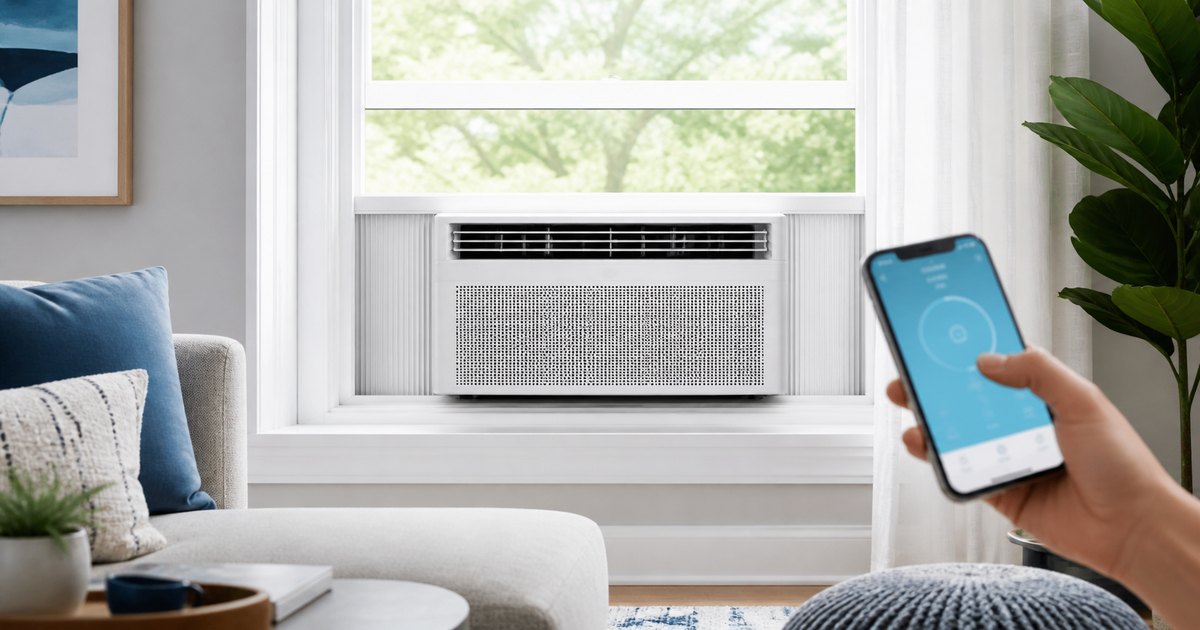
If you’re searching for “Hisense Window Air Conditioner,” you’re probably not in the “maybe someday” phase. You’re in the heat. The room is stuffy. Sleep is turning into a sweaty negotiation. And now you’re weighing one big question:
Is a Hisense window AC the smart, cost-effective way to cool your space—without overpaying for brand hype?
This guide walks you through the Hisense window AC lineup, explains the key features, shows how to pick the right BTU size, outlines what to expect during installation, and explains how to keep the unit running smoothly. Along the way, I’ll reference real specs and manufacturer documentation so you’re not buying blind.
Why a Hisense Window Air Conditioner Is on So Many Shortlists
Hisense has become a serious contender in the window AC space because it targets the “high value, low drama” middle ground: solid features, modern controls, and model variety, often without the premium pricing you’ll see from legacy HVAC brands.
On Hisense’s U.S. site, the window AC category shows a broad range—8,000 BTU, 10,000 BTU, 12,000 BTU, 14,000 BTU, and larger-capacity options, including multiple Wi-Fi and inverter models, as well as window units with heat (handy for shoulder seasons).
That range matters, because window AC satisfaction is less about the logo on the front… and more about whether the unit is properly sized, properly installed, and used in a way that matches how you live.
Hisense Window AC Lineup: What You’ll Typically See
While exact model availability can shift by retailer and season, Hisense’s window AC lineup commonly includes:
- Standard window AC models (cooling-focused)
- Wi-Fi-enabled smart window AC models
- Inverter window AC models (more precise, efficient output)
- Window AC units with heat (cooling + supplemental heating)
The official category page lists multiple “Inverter WiFi” and “WiFi” window AC options across BTU levels, plus “Window With Heat” units at higher capacities.
So the first decision isn’t “Which brand?”—you’ve already narrowed it to Hisense. The real decision is:
Which type of Hisense window air conditioner fits your room and your habits?
Start Here: How to Choose the Right BTU Size
BTU capacity is the foundation. If you get this wrong, everything else becomes a workaround.
A practical example: the Hisense AW0821CW1W is an 8,000 BTU window AC rated for coverage up to 350 sq ft.
That gives you a useful anchor for sizing:
Quick sizing logic (simple, not oversold)
- Small bedrooms / offices → 6,000–8,000 BTU (often ideal)
- Medium rooms / large bedrooms → 10,000–12,000 BTU
- Large living rooms / open spaces → 14,000 BTU and up
- Very large areas → 18,000–24,000 BTU (often needs a stronger electrical setup)
Hisense offers models across these ranges, including 18,000–24,000 BTU options shown on their site.
Two sizing “gotchas” that matter more than people think
- Sun exposure: South-facing rooms can feel like a greenhouse. You may need more capacity.
- Open floor plans: Window units aren’t designed to cool multiple rooms effectively; even the manual guidance for Hisense window units notes that room ACs aren’t intended for multiple rooms.
Bigger isn’t always better, either. Oversized units may short-cycle—cool fast, shut off, repeat—leading to less consistent comfort and weaker humidity control.
Smart Features: What Hisense Window AC “Smart” Actually Means
Many Hisense window air conditioners lean into app-based and voice-based controls.
For instance, the AW0821CW1W “smart” window unit is designed to be controlled via the ConnectLife App (Android/iOS) and supports voice assistants like Google and Alexa.
What smart control is genuinely good for
- Pre-cooling your room before you walk in (especially helpful for bedrooms)
- Scheduling (cool before bedtime, ease off at 2 a.m.)
- Checking settings remotely (useful if you forget whether it’s running)
- Reducing “waste cooling” when life gets chaotic
Smart features aren’t just a gimmick if you’ll actually use them. They’re a comfort multiplier—especially for people who want cooling to feel automatic, not like a daily chore.
Inverter Technology: Why It’s a Big Deal (When You Buy the Right Model)
Not all window ACs are inverter units. But Hisense does sell Smart Inverter Window Air Conditioner models in various sizes, according to their product listings.
So what’s the practical advantage?
In general, inverter tech helps an AC adjust its output more smoothly, rather than blasting at full power and shutting off repeatedly. Review outlets often highlight inverter units for better comfort and efficiency compared to traditional fixed-speed cooling.
If you’re the type of person who hates temperature swings—cold, then warm, then cold again—an inverter model can feel dramatically more “steady.”
Noise Levels: What to Expect in a Bedroom
Noise is the silent dealbreaker. A unit can cool beautifully and still ruin your night if it drones like a generator.
Hisense’s AW0821CW1W spec sheet lists a noise level of 53–57 dB(A).
That range is a useful benchmark for a standard window unit experience: not “silent,” but typically manageable—especially with fan speed control and smart scheduling (lower fan at night, higher output earlier).
If ultra-quiet operation is your #1 priority, focus your shortlist on:
- inverter models (often perceived as smoother/less abrupt)
- units designed explicitly for bedroom use
- any model with published low dB figures (when available)
Efficiency: CEER, ENERGY STAR, and “What Matters” for Your Bill
Efficiency marketing gets messy fast, so let’s make it clean.
The AW0821CW1W spec sheet shows a CEER of 12.0.
CEER (Combined Energy Efficiency Ratio) is one standardized way to understand how efficiently a room air conditioner performs.
One important caution
You’ll sometimes see ENERGY STAR references in product marketing, but certification can vary by model and year, and spec sheets may not always align across versions. For example, the AW0821CW1W spec sheet contains mixed signals (the ENERGY STAR logo appears in one area, while the spec table shows “Energy Star: No”).
So if ENERGY STAR certification is a must-have for rebates or personal preference:
- Verify certification using the exact model number at the time of purchase.
- don’t assume “brand = certification.”
Installation: What You Need to Know Before You Lift the Box
Window AC installation is straightforward—until it isn’t. Most problems come from rushing, skipping support, or ignoring drainage.
Hisense manuals emphasize basics that matter:
- Use two or more people to move/install the unit (weight + awkward angles are real)
- Plug into a grounded 3-prong outlet and don’t use extension cords.
- Ensure cabinet louvers aren’t obstructed so air can move freely.
Window fit example (real spec)
The AW0821CW1W spec sheet lists window width compatibility of 24.5″ to 39″ (with kit) and shows minimum opening height guidance.
Drainage tip that prevents a lot of “why is my wall wet?”
Hisense troubleshooting guidance notes that if water drips inside, the unit may not be properly leveled; it should slope slightly downward toward the outside for proper drainage.
That’s not a minor detail. That’s the difference between “installed” and “installed correctly.”
Day-to-Day Use: Settings That Make a Hisense Window AC Feel Smarter
A good window AC isn’t just “cold air.” It’s control.
Many Hisense units (like the AW0821CW1W) include:
- multiple modes
- multiple fan speeds
- directional airflow control
- timer/sleep functions
- filter monitoring features depending on the model
Practical comfort strategy (works in real homes)
- Blast early, coast later: Cool the room down before you need it, then lower the fan speed.
- Use sleep mode at night: Let the unit ease output while you’re asleep.
- Close doors + block sun: It sounds obvious, but it’s the cheapest “upgrade” you’ll ever buy.
Maintenance: The Small Habit That Protects Performance
Window AC performance usually declines for one boring reason: dirty filters.
Hisense care guidance recommends checking the filter regularly and cleaning it as needed; the manual suggests checking every 2 weeks and explains cleaning steps (vacuum or wash with warm water and mild detergent; air dry completely).
This matters because a clogged filter:
- restricts airflow
- forces longer run times
- can reduce cooling effectiveness
- can increase noise
Clean filter = easier breathing for the machine. And for you.
Troubleshooting: Common Issues and Fixes That Don’t Require a Service Call
Before you panic, check the basics. Hisense troubleshooting guidance highlights common causes such as:
- Restarting too quickly after powering off (wait at least 3 minutes)
- dirty filters and blocked airflow
- improper leveling causing water drip indoors
Quick triage checklist
- Not cooling? Check the filter and ensure the louvers aren’t blocked.
- Cycling too much? The AC may be undersized (or the room may be leaking heat).
- Reset button popped? Electrical disturbances can trip the cord; don’t “solve” it with an extension cord.
If you’re still stuck after the basics, then it’s time to consult the model-specific manual for your exact unit.
Hisense Window Air Conditioner: Who It’s Best For
A Hisense window air conditioner tends to make the most sense if you want:
- Feature-rich cooling without premium pricing
- Smart controls (especially if you’ll use app/voice)
- Multiple BTU options for different room sizes
- A straightforward installation and maintenance routine supported by clear manuals
It may not be the perfect pick if:
- You need a specialized U-shaped design for window flexibility (that’s a different category trend)
- You require ultra-low dB performance above all else (you’ll want to compare noise specs model-by-model)
Hisense Window Air Conditioner vs. Other Popular Brands
Choosing a window air conditioner isn’t just about specs on a box. It’s about ecosystem, reliability, noise profile, efficiency behavior over time, and how intelligently the unit manages real-world heat loads.
So how does a Hisense window air conditioner compare to other widely recognized brands like LG, Frigidaire, GE, or Midea?
Value Positioning
Hisense tends to compete aggressively in the mid-range. You often get:
- Smart Wi-Fi control
- Clean digital displays
- Multiple fan speeds
- Inverter options (on select models)
- Competitive CEER ratings
Some competitors charge more for similar smart functionality. Others offer comparable pricing but fewer modern control features.
Hisense frequently strikes a balance between affordability and technological depth — especially appealing for buyers who want smart controls without flagship-level pricing.
Smart Integration Ecosystem
Many Hisense window AC models use the ConnectLife app, enabling scheduling, remote temperature adjustment, and voice assistant compatibility.
Some competitors lean into proprietary ecosystems or limit smart integration to higher-end models. With Hisense, Wi-Fi functionality is available across several BTU tiers, expanding accessibility.
If remote access matters to you — especially for vacation properties, home offices, or bedrooms you cool before bedtime — this matters more than marketing suggests.
Inverter Availability
Inverter technology is becoming the quiet disruptor in window AC performance.
Traditional units:
- Run at full blast.
- Shut off.
- Restart.
- Repeat.
Inverter units:
- Adjust output dynamically.
- Maintain steadier temperatures.
- Often operate more smoothly.
Hisense offers inverter window air conditioner models in multiple sizes. That alone puts it on par with brands like Midea and LG in this evolving category.
If comfort, stability, and reduced temperature swings matter to you, inverter models are worth prioritizing.
Seasonal Performance: How a Hisense Window Air Conditioner Handles Extreme Heat
Not all window air conditioners respond equally when outdoor temperatures climb into the high 90s or above.
Here’s what happens in real life:
- Smaller BTU units may struggle in poorly insulated rooms.
- Units facing direct sun must work harder.
- Open-concept spaces reduce effective cooling power.
Hisense window AC models are designed for single-room cooling. That means their performance is strongest when:
- Doors are closed.
- Blinds reduce solar heat gain.
- The BTU capacity matches the room size accurately.
If you live in a region with prolonged triple-digit temperatures, slightly upsizing (within reason) can prevent constant full-power operation.
But don’t oversize recklessly. Oversized units can short-cycle — cooling quickly without dehumidifying effectively.
Balance is everything.
Dehumidification Performance: An Often Overlooked Benefit
Cooling is obvious.
Humidity control? Less obvious — but equally important.
When indoor humidity drops:
- Rooms feel cooler at higher thermostat settings.
- Air feels lighter.
- Sleep improves.
- Mold risk decreases.
Window air conditioners inherently remove moisture during the cooling cycle. A properly sized Hisense window air conditioner will:
- Extract humidity during compressor operation.
- Improve comfort beyond simple temperature reduction.
If you live in a humid climate, consistent run time (not short-cycling) improves dehumidification effectiveness. That’s another argument for correct BTU sizing rather than oversizing.
Long-Term Durability: What Impacts Lifespan?
Most window air conditioners last 8–12 years under normal use. Lifespan depends less on brand name and more on behavior.
Factors that extend the life of your Hisense window air conditioner:
- Cleaning the filter every two weeks during heavy use
- Ensuring proper drainage slope
- Avoiding extension cords
- Removing and storing the unit properly in winter (if applicable)
- Covering outdoor-facing components during the off-season
Neglect accelerates wear. Maintenance slows entropy.
It’s that simple.
Electricity Consumption: What Will It Cost to Run?
Running cost depends on:
- BTU rating
- CEER efficiency
- Daily runtime hours
- Local electricity rates
Let’s approximate.
An 8,000 BTU unit with a CEER of around 12 may draw roughly 600–700 watts during operation. If run 8 hours daily, that’s around:
0.7 kW × 8 hours = 5.6 kWh per day
Multiply by your electricity rate (for example, $0.15/kWh):
5.6 × $0.15 = $0.84 per day
Roughly $25 per month during heavy use.
Larger 12,000–14,000 BTU units will consume more, but inverter models may offset some of that by modulating output rather than cycling constantly.
Smart scheduling can significantly reduce runtime waste.
Is a Hisense Window Air Conditioner Easy to Install for Beginners?
For most homeowners or renters, yes — but weight matters.
Typical window AC installation includes:
- Expanding side panels
- Securing top rail brackets
- Installing support brackets (recommended)
- Sealing gaps
- Ensuring a slight outward tilt
However:
- Units above 50–60 lbs benefit from a two-person installation.
- Higher BTU models can exceed 70–100 lbs.
If you’re installing alone and aren’t confident in your ability to lift heavy appliances, consider asking for assistance. A poorly secured unit is a safety risk.
Ideal Use Cases for a Hisense Window Air Conditioner
A Hisense window AC works particularly well in:
Apartments
Affordable cooling without central HVAC installation.
Dorm Rooms
Compact, efficient, and often smart-enabled.
Home Offices
Targeted cooling during work hours without cooling the whole house.
Guest Rooms
Occasional cooling without investing in mini-split systems.
Older Homes Without Ductwork
Window ACs remain the simplest retrofit solution.
FAQs
Is a Hisense window air conditioner good for bedrooms?
Often, yes—especially when you choose the right BTU size and pay attention to published noise ranges. For example, AW0821CW1W lists 53–57 dB(A), which many people find acceptable with proper settings and sleep scheduling.
Do Hisense window AC units have Wi-Fi?
Many models do, and Hisense lists multiple Wi-Fi and inverter Wi-Fi window AC models on their U.S. product category page.
What app does Hisense use for smart window AC control?
Some smart models use the ConnectLife App (Android/iOS) for remote control and monitoring.
How often should I clean the filter?
Hisense maintenance guidance suggests checking the filter regularly—about every two weeks—and cleaning it if needed.
Why is water dripping inside the room?
A common cause is improper leveling. Hisense guidance notes that the unit should slope slightly downward toward the outside to drain correctly.
Conclusion
If your goal is reliable cooling, modern controls, and solid feature depth, a Hisense window air conditioner is a compelling option—especially because the lineup spans small-room units all the way up to higher-capacity models, including inverter and heat-capable options.
Just don’t treat “window AC shopping” like choosing a toaster.
Choose the right BTU for the room. Confirm the features you’ll actually use. Install it with care, so it drains properly and breathes freely. Then maintain it like a machine that’s working hard for you—because it is.