Heating & Heat Pumps
Corner Electric Fireplace TV Stand: The Ultimate Guide to Style, Space-Saving Comfort, and Smart Buying Decisions
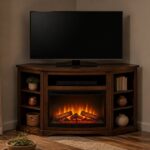
There’s something quietly luxurious about a fireplace. It transforms a room — not just visually, but emotionally. It anchors the space. It invites you to slow down. It softens harsh lighting and turns ordinary evenings into something cinematic.
Now imagine that warmth — literal and aesthetic — integrated into one of the most practical pieces of furniture in your home.
That’s the magic of a corner electric fireplace TV stand.
It’s not just a media console. Not just a heater. Not just décor. It’s a multifunctional solution designed for modern living, especially where space is limited but style is not negotiable.
If you’re considering one, this comprehensive guide will walk you through everything — from features and sizing to heat output, storage capacity, safety, and buying considerations — so you can choose the right unit with confidence.
A Corner Electric Fireplace TV Stand: What Is It?
At its core, a corner electric fireplace TV stand is exactly what it sounds like: a media console designed to fit into a room’s corner, with a built-in electric fireplace insert.
But that simple definition doesn’t capture its appeal.
It’s engineered to:
- Maximize unused corner space.
- Provide supplemental heating
- Create a visual focal point.
- Support your TV and media components.
- Add storage through cabinets or shelving.
Unlike traditional fireplaces, these units require no venting, gas lines, chimney, or structural remodeling. You plug them into a standard outlet, and within minutes, your room feels warmer — and more intentional.
Why Choose a Corner Design?
Corners are often underutilized. They collect floor lamps. Plants. Occasionally clutter.
But a corner electric fireplace TV stand transforms that neglected square footage into a purposeful space.
Space Optimization
For apartments, condos, and smaller living rooms, wall space is limited. A corner design:
- Frees up longer walls for seating or artwork
- Makes compact rooms feel less crowded
- Creates better traffic flow
In open-concept layouts, it can also help subtly define the living area without overwhelming the space.
Better Room Balance
When placed correctly, a corner fireplace stand can create diagonal sightlines that soften rigid, boxy rooms. It adds architectural interest without requiring construction.
The result? A space that feels layered rather than flat.
Key Features to Look For
Not all corner electric fireplace TV stands are created equal. Some are purely decorative. Others are serious heating appliances disguised as furniture.
Here’s what truly matters.
Heating Capacity (BTUs & Square Foot Coverage)
Most units provide 4,000 to 5,000 BTUs and typically heat rooms between 400 and 1,000 square feet, depending on insulation and ceiling height.
If you want supplemental warmth for a bedroom or apartment living room, 4,600–5,000 BTUs is usually ideal.
If you’re expecting whole-house heating, you’ll be disappointed. These are zone heaters, not HVAC replacements.
TV Size Compatibility
Always check the maximum TV size and weight rating.
Common capacities include:
- Up to 50 inches
- Up to 55 inches
- Up to 65 inches (larger premium models)
Measure your TV width, not just diagonal size. A 65-inch TV can easily overhang a smaller stand if you’re not careful.
Adjustable Flame Effects
Modern electric fireplace inserts are impressively realistic.
Look for:
- Multiple flame brightness settings
- Adjustable flame color (amber, blue, mixed tones)
- Independent flame and heat controls
- LED technology for energy efficiency
Some models allow you to run the flames without heat — perfect for summer ambiance.
Storage Options
Storage varies dramatically by model.
You may find:
- Open shelving for cable boxes and gaming consoles
- Side cabinets with tempered glass doors
- Adjustable interior shelves
- Wire management cutouts
If you have multiple media devices, prioritize ventilation and cable management.
Safety Features
Because these units produce heat, safety is essential.
Look for:
- Overheat protection
- Cool-to-touch glass fronts
- Tip-over protection (especially important with children or pets)
- Automatic shutoff timers
Most reputable brands meet strict safety standards, but it’s still worth verifying certifications.
A Corner Electric Fireplace TV Stand’s Advantages
Beyond warmth and media storage, these units offer advantages that traditional fireplaces simply can’t.
No Installation Hassle
There’s no contractor. No permits. No drywall dust.
You assemble the stand (or receive it pre-assembled), slide it into position, plug it in, and you’re done.
It’s fireplace ambiance without renovation anxiety.
Energy Efficiency
Electric fireplaces convert nearly all of the electricity they use into heat. There’s minimal waste.
Since they provide zone heating, you can warm the room you’re using without raising the thermostat for the entire home.
That can translate into noticeable energy savings during cooler months.
Year-Round Ambiance
One of the biggest advantages? Flame-only mode.
You can enjoy flickering flames in July without sweating through movie night.
It’s mood lighting disguised as heating technology.
Apartment-Friendly
For renters, installing a traditional fireplace is impossible. But a corner electric fireplace TV stand offers:
- No permanent modifications
- Easy relocation
- Minimal maintenance
- No smoke or emissions
It’s comfort without commitment.
Popular Styles and Finishes
A fireplace stand shouldn’t look like an afterthought. It should feel cohesive with your décor.
Common finishes include:
- Rustic barnwood
- Espresso brown
- Weathered gray
- White farmhouse
- Black modern matte
- Distressed oak
Designs range from:
- Farmhouse with X-panel cabinet doors
- Contemporary glass-and-metal styles
- Traditional mantel-inspired units
- Minimalist Scandinavian silhouettes
Select a finish that complements the colors of your current furniture and flooring. A mismatched media console can disrupt an otherwise polished room.
How to Choose the Right Size
Sizing mistakes are common. Avoid them.
Measure Your Corner
Measure both wall lengths extending from the corner. Most units require at least 40–48 inches of wall space per side.
Also measure depth — you don’t want the unit protruding awkwardly into walking paths.
Consider Viewing Height
The ideal TV center height is roughly at seated eye level.
If the fireplace insert raises the TV too high, you may strain your neck. Balance aesthetics with ergonomics.
Match Room Scale
A bulky stand in a small apartment will overwhelm the space. A tiny unit in a large room will look underwhelming.
Proportion matters.
Are Corner Electric Fireplace TV Stands Worth It?
For many homeowners and renters, yes.
They combine:
- Practical storage
- Supplemental heating
- Strong visual impact
- Space optimization
- Ease of installation
However, they’re not ideal if:
- You need whole-home heating.
- You already have a built-in media wall.
- Your corner space is extremely narrow.
Like any furniture purchase, it depends on layout, lifestyle, and expectations.
Maintenance and Care
Fortunately, maintenance is minimal.
- Dust regularly to prevent buildup
- Wipe the glass with a non-abrasive cleaner.
- Keep air vents unobstructed.
- Replace LED components only if necessary (rare)
No chimney cleaning. No ash. No gas inspections.
It’s warmth without the mess.
Materials and Build Quality: What Determines Long-Term Value?
At a glance, many corner electric fireplace TV stands look similar. Clean lines. Glass front. Cabinet doors. A glowing ember bed. But beneath that polished exterior lies the real differentiator: construction quality.
Lower-end models often rely heavily on particleboard with thin laminate finishes. While visually appealing at first, these materials can warp over time, especially in humid environments. Mid-range and premium models typically incorporate high-density MDF, reinforced internal framing, and solid wood accents that increase structural integrity.
Pay attention to weight. Heavier units generally indicate denser material composition and more robust internal support — particularly important when holding larger televisions.
The finish matters, too. Scratch-resistant veneers, moisture-sealed edges, and reinforced corners all contribute to longevity. This isn’t just décor; it’s load-bearing furniture that generates heat. Investing in higher build quality ensures your corner electric fireplace TV stand remains stable, attractive, and functional for years — not seasons.
Infrared vs. Fan-Forced Heating: Understanding the Difference
Not all electric fireplace inserts heat the same way. Understanding the distinction can significantly influence your comfort level.
By blowing air across heated coils, fan-forced heaters disperse warmth throughout the space. They heat quickly and are common in standard models. However, the airflow can sometimes feel slightly artificial or dry in very small spaces.
Conversely, infrared quartz heaters directly heat items rather than just the surrounding air. This creates a more natural, sun-like warmth that many users describe as softer and more enveloping. Infrared systems also tend to preserve ambient humidity better than fan-forced models.
If your living space feels drafty or you’re sensitive to dry heat, infrared may be the superior option. If you prioritize rapid temperature increase at a lower price point, fan-forced units perform efficiently.
The choice isn’t about better or worse — it’s about comfort preference and room dynamics.
Safety Standards and Certifications to Look For
When electricity and heat converge, safety must never be an afterthought.
Reputable corner electric fireplace TV stands carry certifications such as UL (Underwriters Laboratories) or ETL (Intertek) approval. These designations confirm that the unit meets established safety standards for electrical performance, heat output regulation, and structural stability.
Overheat protection is another critical feature. If internal temperatures exceed safe thresholds, the unit should automatically shut off to prevent damage or fire risk.
Cool-touch glass fronts are especially important for households with children or pets. Unlike traditional fireplaces, electric units do not produce open flames — but glass surfaces can still become warm during extended operation.
Timers add an additional layer of safety and convenience. Setting the unit to shut off automatically ensures you never accidentally leave it running overnight.
Peace of mind isn’t optional. It’s part of the value equation.
Seasonal Versatility: More Than a Winter Appliance
Many buyers assume a corner electric fireplace TV stand is strictly a cold-weather purchase. That assumption undersells its versatility.
Flame-only mode transforms the unit into ambient lighting year-round. During spring evenings, when heat isn’t necessary, but comfort still is, the visual flicker creates a subtle focal glow. In autumn, before the full heating season begins, it provides light warmth without activating the central heating system.
Even in summer, the aesthetic remains relevant. Soft lighting offsets harsh screen brightness during movie nights. The unit becomes less about temperature and more about atmosphere.
Unlike portable heaters that are stored away for half the year, this piece remains functional and visually integrated throughout the seasons. It doesn’t retreat into a closet once winter ends.
It evolves with your environment — and that adaptability increases its overall value.
Placement Tips for Maximum Visual Impact
Positioning determines perception.
While the unit is designed for corners, the specific corner you choose matters. Ideally, it should be visible upon entering the room, establishing it as an intentional focal point rather than a background afterthought.
Avoid corners blocked by door swings or heavy curtains. Ensure seating angles provide comfortable TV viewing without requiring neck strain. Diagonal layouts can enhance flow, but they must align with natural walking paths.
Lighting influences impact as well. Recessed ceiling lights directly above the unit may wash out flame visibility. Soft, indirect lighting around the perimeter of the room enhances contrast and makes the fire effect more dramatic.
If possible, position the stand against neutral wall colors to allow flame hues and wood finishes to stand out.
Thoughtful placement elevates the unit from functional furniture to an architectural feature.
FAQs
Do they actually produce real heat?
Yes. Most models use a forced-air heater that distributes warm air throughout the room.
Are they expensive to run?
Operating costs vary by electricity rates, but on average, running a 1,500-watt heater costs only a few cents per hour.
Can you mount a TV above them?
You don’t need to — the stand supports the TV directly. Unlike traditional fireplaces, there’s no excessive heat rising toward the screen.
Are they safe for pets?
Generally yes. The glass front stays cool compared to traditional fireplaces, and there are no open flames.
Conclusion
A corner electric fireplace TV stand isn’t just furniture.
It’s a spatial solution. A design statement. A source of warmth. A conversation piece.
It fills a void — literally and visually — transforming forgotten corners into glowing focal points. And in an era where square footage is precious and flexibility matters, that kind of multifunctionality isn’t a luxury.
It’s smart living.
If you want ambiance without installation drama, heat without smoke, and storage without sacrificing style, this hybrid piece might be exactly what your living room has been missing.
And once it’s glowing softly in the corner, casting flickering light across the room while your favorite show plays above it, you may wonder how you ever lived without one.
Floating Fireplace TV Stand: The Modern Statement Piece That Redefines Living Room Comfort
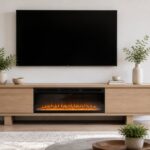
There was a time when a TV stand was little more than a utilitarian rectangle — sturdy, forgettable, purely functional. It held a television. It stored a few DVDs. It did its job and asked for nothing more.
But design has evolved. Expectations have shifted. Homes have become more curated, more intentional, more expressive.
Enter the floating fireplace TV stand — a hybrid of architecture and furniture, warmth and minimalism, technology and ambiance. It doesn’t merely support a screen; it anchors the room. It creates atmosphere. It elevates the entire visual field of the space by removing bulk from the floor and raising the focal point.
In today’s interiors — especially open-concept homes, modern apartments, and renovation-forward spaces — this piece represents more than décor. It symbolizes efficiency without sacrificing luxury.
If you’re considering one, you’re not just choosing furniture.
You’re reshaping the personality of your living room.
What Is a Floating Fireplace TV Stand?
A floating fireplace TV stand is a wall-mounted entertainment unit that integrates an electric fireplace insert while appearing suspended above the floor. Unlike traditional media consoles that rest on legs or a base, this unit mounts directly to the wall, creating a sleek, weightless effect.
The defining element is integration. The fireplace isn’t an afterthought. It is seamlessly built into the stand’s design, often centered beneath the TV mounting area. Most units include LED flame technology, adjustable brightness levels, and multiple heat settings.
And because the fireplace is electric, it requires no venting, gas lines, or chimney. Just a standard outlet.
The floating design does more than look modern. It reduces visual clutter. It enhances negative space. It allows flooring to remain visible, which psychologically expands the room.
In short, it’s a combination of comfort and architectural illusion — warmth without heaviness.
Why Floating Fireplace TV Stands Are So Popular
Trends in interior design don’t become widespread without reason. The surge in popularity of floating fireplace TV stands stems from a convergence of practical need and aesthetic desire.
Homeowners today want pieces that multitask.
They want:
- Furniture that saves space
- Heating solutions without structural remodeling
- Clean-lined designs that photograph well
- Minimalism without sterility
A floating fireplace TV stand accomplishes all of that in one installation.
The wall-mounted format visually declutters the room. The integrated fireplace adds warmth — both literal and emotional. The floating silhouette feels custom-built, even when it isn’t.
Moreover, in the era of social media interiors and design-conscious renovations, this piece photographs beautifully. It creates symmetry. It establishes a strong central focal point. It blends modern tech with timeless coziness.
It’s efficient. It’s atmospheric. It feels intentional.
And that’s precisely why demand continues to trend upward.
Key Features to Look For in a Floating Fireplace TV Stand
Choosing the right floating fireplace TV stand requires more than selecting a color and clicking “add to cart.” The details determine both performance and longevity.
Electric Fireplace Specifications
Pay close attention to heating power. Most models range from 4,000 to 5,100 BTUs, which typically heat rooms of 400 to 500 square feet. For open-concept spaces, you may want higher output.
Look for adjustable thermostats and programmable timers. These allow you to regulate comfort without wasting energy.
Flame customization matters, too. Modern units offer:
- Adjustable flame brightness
- Multiple flame colors
- Ember bed color variations
- Flame-only operation mode
The more control you have, the more adaptable the ambiance becomes — from warm golden glow in winter to cool-toned aesthetic lighting in summer.
A premium model won’t just heat your space.
It will let you curate it.
TV Size Compatibility
One of the most common purchasing mistakes is overlooking size compatibility. Floating fireplace TV stands are typically designed to accommodate TVs between 55 and 70 inches, but weight limits vary significantly.
Check both:
- Maximum screen size
- Maximum weight capacity
Flat screens may look light, but larger models can exceed 60 pounds.
Additionally, consider proportional balance. A stand that is too narrow beneath a wide TV creates visual imbalance. Ideally, the stand should extend slightly beyond the television’s width for a cohesive aesthetic.
Also, verify VESA mounting compatibility if the stand includes integrated brackets.
The goal is harmony — not just functionality. A properly sized setup looks architectural, almost built-in.
When the proportions are right, the entire wall becomes a design feature rather than just a media zone.
Wall Mounting System
Because this unit floats, structural integrity is everything.
Look for:
- Heavy-duty steel mounting brackets
- Reinforced internal framing
- Clear stud alignment instructions
- High-quality mounting hardware
Wall studs must be located and used. Drywall anchors alone are insufficient to support the combined weight of the stand and the television.
If your walls are concrete or brick, verify that the mounting kit supports masonry installation.
Some premium units include adjustable leveling systems to ensure the stand remains perfectly horizontal — even if your wall isn’t.
Installation may take longer than placing a traditional console on the floor, but once mounted correctly, the result is dramatically more impactful.
It feels permanent. Intentional. Engineered.
And that sense of solidity enhances both safety and visual appeal.
Storage & Cable Management
A floating fireplace TV stand should look streamlined — and that means hiding the chaos of cords, routers, consoles, and streaming devices.
The best designs include:
- Concealed cable routing channels
- Ventilated media compartments
- Soft-close cabinet doors
- Adjustable shelving
Cable management is especially important in floating designs because exposed wires disrupt the illusion. If cords dangle visibly beneath the unit, the clean aesthetic collapses instantly.
Consider your tech ecosystem before purchasing. Do you have:
- A soundbar?
- Gaming consoles?
- Cable boxes?
- Wi-Fi routers?
Ensure adequate storage depth and ventilation.
Good design anticipates clutter before it happens.
And the right floating fireplace TV stand makes organization look effortless.
Types of Floating Fireplace TV Stands
Design variation is vast. From minimalist gloss finishes to rustic wood textures, floating fireplace TV stands adapt to nearly any interior style.
Minimalist Modern
This style emphasizes sharp lines, high-gloss finishes, and monochromatic palettes. White lacquer and matte black are common choices.
LED underlighting often enhances the floating effect, casting a soft glow beneath the unit. The fireplace glass is typically frameless, adding to the streamlined look.
This type works beautifully in contemporary apartments, high-rise condos, or spaces with neutral color schemes and sleek furnishings.
It feels crisp. Intentional. Almost gallery-like.
Rustic Modern Hybrid
For homeowners who crave warmth without abandoning modernity, rustic-modern designs blend wood textures with clean silhouettes.
Think walnut finishes. Oak veneers. Subtle grain patterns.
The fireplace insert often features traditional amber flames, reinforcing the cozy aesthetic.
These units pair well with:
- Leather sofas
- Earth-tone palettes
- Textured throw blankets
- Matte black hardware
It’s modern comfort — grounded, organic, inviting.
High-Gloss Luxury Units
At the upper end of the spectrum are luxury floating fireplace TV stands with premium finishes and advanced flame technology.
These models may include:
- Touchscreen controls
- Multi-color LED systems
- Tempered glass shelving
- Mirror-effect flame backgrounds
They command attention. They are bold.
Ideal for dramatic living rooms or statement walls, they create an atmosphere that feels upscale and immersive.
This isn’t subtle décor.
Its presence.
Floating Fireplace TV Stand vs. Traditional Fireplace Console
Traditional fireplace TV stands rest on the floor and can be repositioned easily. They require minimal installation and are ideal for renters or those who frequently rearrange furniture.
Floating models, by contrast, demand commitment. Once mounted, they become semi-permanent fixtures.
But what they offer in return is elevated design.
Floating units:
- Create visual openness
- Feel custom-installed
- Reduce perceived clutter
- Offer architectural appeal
Traditional consoles:
- Offer greater portability
- Provide a larger storage capacity.
- Require less installation effort.
If flexibility is your priority, traditional may suit you better.
If aesthetic impact and modern design are paramount, floating stands win decisively.
Installation Considerations
Proper installation determines both safety and longevity.
Measure wall dimensions carefully. Ensure your viewing height aligns with ergonomic comfort — typically, the TV center should sit roughly 42 to 48 inches from the floor.
Confirm stud spacing. Standard U.S. stud spacing is 16 inches on center, but older homes may vary.
Ensure electrical outlets are positioned appropriately. Some homeowners install recessed outlets behind the unit for a cleaner look.
And, most importantly, verify the manufacturer’s heat-clearance recommendations. Electric fireplaces are designed to disperse heat safely, but spacing guidelines must be followed.
If you lack confidence in wall mounting heavy fixtures, hiring a professional installer may be a worthwhile investment.
Precision matters.
Safety: Are Floating Fireplace TV Stands Safe?
Yes — when installed correctly.
Electric fireplaces do not produce real flames, combustion gases, or smoke. They operate using heating coils and fan systems.
Many models include:
- Overheat protection sensors
- Auto shut-off timers
- Cool-touch glass fronts
- Child lock functions
Because there is no combustion, there is no risk of carbon monoxide.
That said, proper wall anchoring and heat clearance are essential. The fireplace should never be obstructed by objects that block ventilation.
When safety guidelines are followed, these units are among the safest fireplace options available.
They provide ambiance without hazard — warmth without risk.
How to Choose the Best Floating Fireplace TV Stand
Choosing wisely requires balancing aesthetics with practicality.
Assess your room size. Oversized units can dominate small rooms. Undersized models may look disproportionate beneath large TVs.
Consider color harmony. White brightens dark rooms. Walnut warms neutral spaces. Black adds contrast and drama.
Evaluate heating needs. If you live in a colder climate, prioritize BTU output and thermostat control.
Finally, set a realistic budget. Entry-level models begin around $300, while premium designer units can exceed $2,000.
The right choice isn’t always the most expensive.
It’s the one that fits your space, your needs, and your design vision seamlessly.
Frequently Asked Questions
Do floating fireplace TV stands produce real heat?
Yes. Most electric fireplace inserts generate between 4,000 and 5,100 BTUs, enough to comfortably heat rooms up to 400–500 square feet.
Can I mount a TV directly above the fireplace?
Yes, as long as the unit is designed for top heat dissipation and the manufacturer’s clearance guidelines are followed.
Are floating fireplace TV stands safe for homes with children?
Generally, yes. Most models feature cool-touch glass, overheat protection, and auto shut-off functions.
Do they require professional installation?
Not always, but secure stud mounting is essential. Professional installation is recommended if you’re unsure.
Can I use the flames without heat?
Absolutely. Most electric models offer a flame-only mode for year-round ambiance.
Are they energy efficient?
Yes. Electric fireplaces convert nearly all of the electricity they use into heat and are ideal for zone heating.
Floating Fireplace TV Stand Comparison Table
|
Feature |
Entry-Level Models |
Mid-Range Models |
Premium Models |
|
Average Price |
$300–$600 |
$600–$1,200 |
$1,200–$2,500+ |
|
Heating Output |
4,000 BTUs |
4,600–5,000 BTUs |
Up to 5,100 BTUs |
|
Room Coverage |
Up to 400 sq ft |
400–500 sq ft |
500+ sq ft |
|
Flame Options |
Basic brightness |
Adjustable colors & brightness |
Multi-color LED + ember customization |
|
TV Compatibility |
Up to 55–60” |
Up to 65” |
Up to 70”+ |
|
Storage |
Limited shelving |
Enclosed cabinets + shelving |
Soft-close cabinets + premium media storage |
|
Mounting Hardware |
Standard brackets |
Reinforced brackets |
Heavy-duty steel + leveling systems |
|
Smart Features |
Remote control |
Remote + timer |
Remote, touchscreen, programmable thermostat |
Conclusion
A floating fireplace TV stand isn’t just furniture. It’s a transformation.
It lifts the room.
It adds warmth without clutter.
It blends technology with atmosphere in a way that feels deliberate rather than decorative.
For modern homes seeking efficiency and elegance, it’s one of the most impactful upgrades available without structural remodeling.
When chosen thoughtfully and installed properly, it becomes the quiet focal point of the room — subtle, yet commanding.
Turn on the flames. Dim the lights. Let the space breathe.
And watch how a single floating installation can redefine the entire environment.
Floating TV Stand With Fireplace: The Ultimate Guide to Style, Warmth, and Smart Space Design
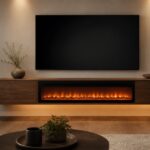
Minimalism meets modern comfort. That’s the promise — and the quiet power — behind a floating TV stand with fireplace. It’s not merely a piece of furniture. It’s a visual anchor. A heat source. A design statement that transforms an ordinary wall into a curated focal point.
In today’s interiors, space is currency. Clean lines are a luxury. And multifunctional pieces are no longer optional — they are expected. A floating fireplace TV stand answers that demand with architectural elegance. It frees the floor while commanding the wall. It introduces warmth without structural renovation. It creates ambiance without smoke, soot, or logistical headaches.
Whether you’re renovating a modern condo, upgrading a suburban living room, or reimagining a compact apartment layout, this hybrid unit offers something compelling: sophistication without complication.
If you’re considering investing in one, this comprehensive guide will help you evaluate, compare, and ultimately choose the right model with confidence.
What Is a Floating TV Stand With Fireplace?
At its core, a floating TV stand with a fireplace is a wall-mounted entertainment unit that integrates an electric fireplace directly into its design. Unlike traditional consoles that rest on the floor with visible legs or bases, a floating version is suspended — typically secured into wall studs — creating the illusion that it is hovering.
That visual suspension changes everything.
The open space beneath enhances airflow, increases perceived square footage, and delivers a built-in aesthetic that feels custom rather than store-bought. It mimics high-end interior installations often seen in luxury condos or architectural design magazines.
The fireplace component is almost always electric. These inserts utilize LED flame technology, heating coils, and internal fans to produce both realistic flame effects and adjustable warmth. Many modern units let you operate the flame visuals independently of the heat, so you can enjoy the ambiance year-round.
This combination of function and form makes the floating fireplace TV stand both practical and aspirational — a rare duality in furniture design.
Why Floating Fireplace TV Stands Are So Popular
The surge in popularity isn’t random. It reflects evolving lifestyle priorities.
First, homes are shrinking. Urbanization has driven up apartment living, and square footage has become increasingly expensive. People want open space — even if it’s visual rather than literal. Floating furniture satisfies that desire by reducing perceived clutter.
Second, interior design has shifted dramatically toward minimalism. Scandinavian influence. Japandi calm. Contemporary monochrome palettes. These aesthetics demand restraint, symmetry, and elevated forms. Bulky floor cabinets feel outdated in comparison.
Third, homeowners crave ambiance without undertaking major renovation projects. Installing a traditional gas or wood-burning fireplace requires permits, ventilation systems, masonry work, and a high cost. An electric fireplace TV stand delivers atmosphere instantly — no construction crew required.
And perhaps most importantly, social media has amplified demand. Clean, floating entertainment walls photograph beautifully. They look curated. Intentional. Elevated.
In a world driven by both practicality and presentation, floating fireplace TV stands sit comfortably at the intersection of both.
Key Benefits of a Floating TV Stand With Fireplace
Beyond aesthetic appeal, the benefits extend into functionality, lifestyle enhancement, and long-term usability.
Space Optimization
By mounting the unit directly to the wall, you eliminate the visual heaviness that traditional furniture often introduces. The room breathes. Light flows underneath. Vacuuming becomes effortless. Even in smaller rooms, the floating illusion prevents the “cramped” feeling that grounded cabinetry can create.
In tight spaces — especially apartments under 800 square feet — that difference can feel transformative.
Modern Design Statement
Floating units feel intentional. They don’t look temporary or transitional. They resemble custom millwork — even when purchased pre-assembled. The linear profile aligns beautifully with mounted televisions, creating a seamless horizontal design that anchors the entire wall.
The result? A room that feels curated rather than cluttered.
Supplemental Heat
Most integrated electric fireplaces generate between 4,000 and 5,000 BTUs, sufficient to heat rooms up to 400 square feet. This isn’t meant to replace central heating — but it does reduce reliance on it during mild winter evenings.
On cool nights, instead of heating the entire house, you warm the room you’re using. Efficient. Targeted. Comfortable.
Adjustable Ambiance
Modern models go far beyond basic orange flames. Today’s electric inserts may include:
- Adjustable brightness levels
- Multiple flame colors (blue, amber, multicolor blends)
- Ember bed customization (crystals, logs, stones)
- Remote controls and smartphone integration
- Sleep timers and programmable heat settings
Ambiance becomes customizable — tailored to mood rather than fixed in function.
Cleaner Living Environment
Unlike gas or wood fireplaces, electric units produce no smoke, soot, or combustion byproducts. There’s no chimney maintenance. No ash cleanup. No carbon monoxide risk.
It’s warmth — simplified.
Important Features to Consider Before Buying
A floating TV stand with a fireplace may look similar across brands, but internal specifications vary widely. Paying attention to details ensures both safety and satisfaction.
Size & TV Compatibility
Scale is everything. Too small, and it looks awkward beneath a large television. Too large, and it overwhelms the wall.
Confirm:
- Maximum supported TV size (often 55”, 65”, or 75”)
- Weight capacity
- Overall width relative to your wall dimensions
- Mounting height for ergonomic viewing
Ideally, your television should sit at eye level when seated. If the floating stand sits too low or too high, comfort suffers over time.
Measure twice. Visualize proportion. Consider wall symmetry.
Design isn’t only about function — it’s about balance.
Heat Output & Coverage
While most electric fireplaces heat up to 400 square feet, some premium units offer greater coverage or enhanced airflow.
Consider:
- Room insulation
- Ceiling height
- Draft exposure
- Supplemental vs. primary heating needs
If you live in a colder climate, ensure the heater includes an adjustable thermostat control rather than simple on/off settings. Advanced models allow you to set specific temperatures — adding precision rather than approximation.
Flame Technology & Realism
This is where price differences become visible.
Lower-tier models may offer static flame visuals. Mid- to high-range versions often include layered LED technology that mimics flickering depth and ember glow with surprising realism.
Look for:
- Adjustable flame speed
- Customizable ember colors
- Depth-enhanced flame projection
- Ultra-thin glass panels for clarity
When done well, the effect can rival built-in electric fireplaces seen in luxury developments.
Material & Build Quality
Construction affects longevity.
Common materials include engineered wood, MDF with laminate finish, solid wood veneers, and tempered glass accents. High-gloss finishes create a modern feel, while matte or wood-grain options offer warmth and versatility.
Examine:
- Edge finishing
- Hardware durability
- Weight capacity ratings
- Surface resistance to scratches
A floating piece must be structurally dependable. Weak materials are not worth the compromise.
Storage & Cable Management
Minimalism doesn’t mean sacrificing practicality.
Many floating units include concealed compartments, side cabinets, or open shelving for media devices. Integrated cable cutouts help hide wires, maintaining a clean aesthetic.
If you use gaming consoles, streaming devices, or soundbars, confirm compatibility. Thoughtful storage prevents clutter from undermining the minimalism you’re aiming for.
Installation Requirements
Mounting is not optional — it is essential.
Most floating units must be anchored to wall studs. Drywall alone will not safely support the weight.
Ask yourself:
- Do you have stud access in the desired location?
- Will the mounting height align with the electrical outlets?
- Do you need professional installation?
Improper mounting risks damage—not only to the furniture but also to your wall and television.
Precision matters here.
Best Rooms for a Floating TV Stand With Fireplace
While living rooms remain the primary setting, versatility expands placement options.
Living Room
In open-concept homes, a floating fireplace TV stand becomes the focal point. It visually separates seating zones while maintaining airflow and spatial continuity.
Bedroom
Few upgrades elevate a bedroom like an integrated fireplace ambiance. Positioned beneath a wall-mounted TV, it creates a hotel-inspired retreat — cozy yet refined.
Home Office
Remote work has changed interior priorities. A floating fireplace unit in an office space enhances both comfort and on-camera presence during video meetings.
Apartments & Condos
In smaller dwellings, floor space is invaluable. Floating designs maximize perceived openness while delivering warmth and entertainment functionality in a single footprint.
Floating vs. Traditional Fireplace TV Stands
Traditional fireplace TV stands rest directly on the floor. They are often larger, bulkier, and easier to install.
Floating units, however, emphasize:
- Clean architectural lines
- Visual openness
- Contemporary appeal
- Easier cleaning access
Traditional units may offer more storage, but they take up more floor space and can feel heavy in compact rooms.
Choosing between them is less about utility and more about design philosophy.
Do you prefer grounded stability? Or elevated elegance?
Are Floating TV Stands With Fireplaces Safe?
Safety depends on quality and installation.
Electric fireplaces are generally safe because:
- They produce no open flame.
- Exterior surfaces remain cool to the touch.
- Overheat protection is standard.
- Automatic shutoff features are common.
However, improper mounting presents a risk. Secure anchoring into studs is essential.
If children or pets are present, look for models with child-lock features and tempered safety glass.
When installed properly, they are among the safest fireplace options available.
Design Tips for Styling a Floating Fireplace TV Stand
The floating effect thrives on restraint.
Keep the surrounding décor minimal. Overcrowding the wall diminishes impact. Instead, introduce vertical elements — tall plants, sleek sconces, or elongated artwork — to frame the piece.
Consider LED strip lighting behind the unit for dramatic evening ambiance. The subtle glow amplifies depth and reinforces the illusion of suspension.
Balance sleek surfaces with texture. If your unit is high-gloss white or black, offset it with woven rugs, linen curtains, or wood accents.
Design is dialogue. Hard meets soft. Light meets shadow.
Let the fireplace glow anchor the room.
Price Range: What Should You Expect?
Pricing reflects material quality, fireplace realism, size, and brand reputation.
- $300–$600: Entry-level models, smaller dimensions
- $600–$1,200: Improved flame technology, better finishes
- $1,200+: Premium builds, enhanced realism, larger scale
Invest according to longevity expectations. A well-constructed floating TV stand with a fireplace can serve as a long-term centerpiece — not just a temporary décor experiment.
Floating TV Stand With Fireplace: Quick Comparison Guide
|
Feature |
What to Look For |
Why It Matters |
Ideal Recommendation |
|
TV Size Compatibility |
55”–75” support |
Ensures proportional fit and safety |
Choose a stand slightly wider than your TV |
|
Heat Output |
4,000–5,000 BTUs |
Determines room heating capability |
Suitable for rooms up to 400 sq. ft. |
|
Flame Settings |
Adjustable colors & brightness |
Enhances ambiance customization |
Multi-color LED with dimming options |
|
Mounting Type |
Stud-mounted wall installation |
Ensures structural safety |
Direct stud mounting (not drywall-only) |
|
Material Quality |
MDF, engineered wood, tempered glass |
Impacts durability and aesthetics |
High-density engineered wood with reinforced brackets |
|
Storage Options |
Cabinets, shelves, cable management |
Reduces clutter and hides wires |
Built-in cable cutouts + concealed compartments |
|
Remote Control |
Included or app-enabled |
Convenience and ease of use |
Remote + timer + thermostat control |
|
Safety Features |
Overheat protection, auto shutoff |
Prevents fire hazards |
Built-in overheating sensor |
|
Installation Difficulty |
Moderate to advanced |
May require professional help |
Professional install for heavier units |
|
Price Range |
$300–$1,200+ |
Reflects build quality & flame realism |
Mid-range for best value |
Frequently Asked Questions
Are floating TV stands with fireplaces safe?
Yes. Most models use electric fireplaces with overheating protection and cool-to-touch glass. Proper wall mounting into studs is essential for safety.
Can a floating TV stand with a fireplace heat a full room?
Typically, they heat up to 400 square feet. They work best as supplemental heat rather than a primary heating source.
Will the heat damage the TV above it?
No — quality models direct heat forward, not upward. Always follow the manufacturer’s recommended clearance guidelines.
How difficult is installation?
Installation requires secure wall mounting into studs. If you’re not experienced with mounting heavy units, professional installation is recommended.
Do electric fireplaces look realistic?
Modern LED flame technology offers adjustable colors, brightness, and ember effects. Higher-end models provide impressively realistic visuals.
Are floating fireplace TV stands good for small spaces?
Absolutely. Their wall-mounted design frees up floor space and creates a more open, minimalist look.
Do they require ventilation?
No. Electric fireplaces do not need chimneys, vents, or gas lines — just a standard electrical outlet.
What is the average price?
Depending on size, materials, and flame characteristics, most floating TV stands with fireplaces cost between $300 and $1,200 or more.
Conclusion
A floating TV stand with a fireplace isn’t simply about heating a room. It’s about redefining space. Elevating design. Blending technology with ambiance in a way that feels seamless rather than intrusive.
It creates warmth — both literal and visual.
It reduces clutter while increasing presence.
It feels modern, yet inviting.
If you value clean lines, multifunctional design, and controlled atmosphere, this investment delivers more than surface appeal.
Measure carefully. Choose thoughtfully. Install securely.
Then dim the lights.
Turn on the flames.
And let your wall become the centerpiece it was meant to be.
Bosch Heat Pump: Complete Guide to Models, Efficiency, Costs, Performance, and Buyer Considerations (2026)
When homeowners begin researching high-efficiency HVAC systems, one name surfaces steadily — sometimes quietly, sometimes emphatically — Bosch.
It isn’t the loudest brand in the room.
It doesn’t dominate billboards.
It doesn’t rely on decades of HVAC advertising nostalgia.
Instead, Bosch earns attention the way engineering-driven brands typically do: through performance consistency, inverter refinement, and pricing that feels almost disruptive compared to legacy HVAC giants.
A Bosch heat pump occupies an intriguing space in today’s market. It merges European engineering discipline with modern inverter modulation technology, high SEER2 ratings, controlled sound levels, and strong energy optimization — all while remaining accessible to homeowners who don’t want to pay a premium simply for brand prestige.
But reputation alone isn’t enough.
Does it perform in real-world climates?
Is it reliable long-term?
Does it justify installation costs?
And how does it compare to Mitsubishi, Lennox, Trane, or Carrier?
This guide goes deep. Not surface-level specs. Real-world implications. Technical nuance. Buyer psychology. Long-term value.
Let’s begin.
What Is a Bosch Heat Pump?
At its core, a Bosch heat pump is an electrically powered HVAC system that transfers heat rather than generating it. That distinction — transfer instead of create — is what makes heat pumps fundamentally more efficient than traditional combustion furnaces.
In cooling mode, it extracts heat from indoor air and releases it outdoors.
In heating mode, it reverses the refrigerant flow, pulls ambient heat from the outside air — even when temperatures drop — and moves that warmth indoors.
But here’s where Bosch separates itself from entry-level systems:
It prioritizes inverter-driven compressors.
Traditional single-stage systems operate like a light switch — fully on or fully off. Two-stage systems offer slight modulation. But inverter systems? They adjust continuously. They fine-tune output in real time based on demand.
Instead of dramatic temperature swings, you get subtle calibration.
Instead of energy spikes, you get gradual modulation.
Instead of abrupt noise, you get a steady, almost imperceptible operation.
That difference isn’t theoretical. It directly affects:
- Indoor comfort stability
- Humidity control
- Long-term mechanical wear
- Utility bills
- Acoustic experience
Bosch heat pumps aren’t just heating and cooling machines. They’re dynamic thermal regulators designed to respond — not react — to your home’s needs.
Bosch Heat Pump Models
Bosch’s HVAC lineup reflects a strategic philosophy: fewer models, better refinement. Rather than overwhelming buyers with dozens of overlapping tiers, Bosch focuses on streamlined, performance-driven systems.
That simplicity benefits homeowners. It reduces confusion. It narrows decision fatigue. And it allows installers to specialize.
Let’s explore the core offerings.
Bosch IDS 2.0 (Inverter Ducted Split System)
The IDS 2.0 is Bosch’s flagship residential ducted heat pump system — and arguably the model responsible for the brand’s rapid HVAC growth in North America.
Designed to integrate with existing ductwork, it offers a smooth upgrade path for homeowners replacing an aging furnace and central AC system.
What makes IDS 2.0 compelling isn’t just the efficiency rating. It’s the modulation range. The inverter compressor adjusts output incrementally rather than cycling aggressively, maintaining interior comfort within tight temperature bands.
That means:
- Fewer cold drafts in winter
- Reduced humidity swings in summer
- Lower peak electrical draw
- Extended compressor lifespan
It’s compatible with air handlers and can be configured in dual-fuel setups with gas furnaces in colder climates.
This model isn’t flashy. It’s disciplined. And that restraint is part of its appeal.
Bosch Climate 5000 Ductless Mini-Split
For homes without ductwork — older properties, additions, garage conversions, basement remodels — Bosch’s Climate 5000 series provides zoning flexibility without structural overhaul.
Ductless systems operate independently per indoor unit. That allows precise temperature control in each room. The bedrooms are cooler at night. Living spaces are warmer during the day. No compromise.
Multi-zone configurations enable connecting multiple indoor heads to a single outdoor condenser, optimizing efficiency without sacrificing customization.
Ductless systems also reduce energy losses associated with leaky ductwork — a hidden inefficiency in many homes.
In scenarios where full duct replacement would be cost-prohibitive, the Climate 5000 becomes not just practical — but strategic.
Bosch BOVA Series (Legacy Foundation)
The earlier BOVA inverter series helped Bosch establish credibility in North American HVAC markets. While largely superseded by IDS 2.0, it introduced homeowners and contractors to Bosch’s inverter-first philosophy.
Understanding the BOVA lineage matters because it shows Bosch didn’t rush into HVAC. It iterated. It refined. It improved compressor control algorithms and airflow coordination before releasing newer generations.
That developmental patience is part of Bosch’s broader engineering identity.
Bosch Heat Pump Efficiency Ratings
Efficiency ratings aren’t marketing decorations. They represent a long-term financial trajectory.
A small SEER difference compounds over the years. An incremental increase in HSPF translates into measurable winter savings.
Bosch’s inverter systems frequently achieve:
- Up to 20.5 SEER2
- Up to 10.5 HSPF2
Those numbers place them comfortably within high-efficiency territory, often qualifying for federal and state rebates.
But efficiency isn’t just about peak numbers.
Inverter systems maintain high part-load efficiency — meaning they operate efficiently not just at maximum output, but during the far more common low-to-moderate demand conditions.
Since HVAC systems run at partial load most of the time, this nuance significantly impacts real-world energy consumption.
Efficiency, in this case, isn’t theoretical. It’s behavioral.
How Does Bosch Perform in Cold Climates?
Cold-climate performance is one of the most critical questions in heat pump adoption.
Historically, heat pumps struggled when outdoor temperatures dropped significantly. Efficiency declined. Supplemental heating became necessary.
Bosch’s inverter-driven technology provides more stable heating at lower temperatures than conventional single-stage systems.
Many models maintain operational heating performance down to approximately 5°F. With auxiliary heat strips or dual-fuel configurations, they remain viable even in colder regions.
However, homeowners in sub-zero zones — northern Minnesota and parts of Canada — may still consider specialized “hyper-heat” systems from brands engineered for extreme cold.
For moderate to cold U.S. climates, though, Bosch performs reliably. And often impressively.
It balances cold-weather capability with cost restraint.
Bosch Heat Pump Cost (Installed)
Installed cost depends on factors beyond the equipment itself.
Typical installed price ranges:
- $8,000 – $15,000 for ducted IDS systems
- $4,000 – $10,000 per zone for ductless installations
Factors influencing total cost include:
- Electrical panel upgrades
- Ductwork modifications
- Line set replacement
- Permit requirements
- Regional labor pricing
Bosch systems often undercut premium-tier brands by several thousand dollars while offering similar inverter performance.
It occupies a strategic pricing lane: not entry-level, not luxury-tier — but high-performance value.
When factoring in federal incentives, the effective cost can become significantly more approachable.
Federal Tax Credits & Rebates
The Inflation Reduction Act expanded federal incentives for high-efficiency heat pumps.
Many Bosch systems qualify for:
- Up to $2,000 federal tax credit
- State-level clean energy rebates
- Utility company incentive programs
Rebates vary by region and system certification. Always confirm AHRI documentation and consult with your installer prior to purchase.
These incentives aren’t minor discounts. They can meaningfully alter the ROI timeline.
For many homeowners, rebates shorten payback periods by several years.
Pros of a Bosch Heat Pump
Inverter Technology at a Competitive Price
Bosch offers advanced modulation without inflating costs to premium-brand levels.
Quiet Operation
Outdoor sound levels often hover around conversational decibels — a noticeable difference in suburban neighborhoods.
Energy Efficiency
High SEER2 and HSPF2 ratings translate into reduced long-term operating costs.
Consistent Comfort
Temperature fluctuations shrink. Rooms feel balanced.
Strong Warranty
A ten-year parts warranty upon registration provides confidence.
Cons of a Bosch Heat Pump
Installation Sensitivity
Improper sizing or airflow miscalculations undermine inverter benefits. Installer expertise is critical.
Extreme Cold Limitation
While strong, Bosch isn’t engineered specifically for ultra-subzero climates without supplemental support.
Brand Recognition in HVAC
Some homeowners are more familiar with traditional HVAC brands, though Bosch’s global reputation offsets this concern.
Bosch vs. Mitsubishi
Mitsubishi excels in extreme cold climates and hyper-heat technology. It commands a higher price.
Bosch competes strongly in moderate climates, where installation costs are lower.
If sub-zero heating without backup is essential, Mitsubishi may be the way to go. If cost-to-performance balance matters more, Bosch stands tall.
Bosch vs. Trane or Lennox
Trane and Lennox maintain premium branding and extensive dealer networks.
Bosch offers similar inverter efficiency at a lower upfront price.
For homeowners focused on performance per dollar rather than brand prestige, Bosch becomes a strategic alternative.
Is a Bosch Heat Pump Reliable?
Bosch’s global engineering history spans automotive systems, industrial equipment, and advanced manufacturing technologies.
In HVAC, inverter compressors are generally considered reliable when correctly installed and maintained.
Common homeowner feedback includes:
- Smooth temperature consistency
- Noticeable energy bill reductions
- Extremely quiet outdoor units
Long-term reliability depends heavily on installation quality — but the hardware foundation is solid.
Ideal Home for a Bosch Heat Pump
Bosch heat pumps work best in homes that:
- Have functional ductwork
- Seek AC + furnace replacement.
- Value inverter efficiency
- Want modern performance without a premium markup.
They are especially compelling in moderate-to-cold climates where balanced heating and cooling performance matters year-round.
Installation Considerations: Why Proper Setup Determines Performance
A Bosch heat pump is only as good as the environment in which it’s installed.
That statement may sound obvious — but it’s frequently overlooked.
Inverter-driven systems are precise machines. They modulate output in small increments. They respond to subtle temperature shifts. They rely on calibrated airflow and accurate load calculations. When installed correctly, they operate like finely tuned instruments. When installed poorly, they lose the very advantages that justify their higher efficiency ratings.
The first and most critical step is a Manual J load calculation. This is not optional. It’s not a guess based on square footage. A proper load calculation evaluates insulation levels, window exposure, ceiling height, air leakage, orientation to sunlight, and climate data. Oversizing a Bosch inverter system reduces modulation benefits and can cause short cycling. Undersizing strains the compressor and compromises winter performance.
Next comes ductwork evaluation. Many homes have duct systems designed for older, single-stage furnaces. Static pressure, airflow balancing, and return sizing must be checked. Inverter systems require consistent airflow to maintain efficiency and humidity control.
Electrical panel capacity also matters. Some installations require breaker upgrades or dedicated circuits, especially when auxiliary heat strips are included.
Refrigerant line sets must be properly sized and vacuumed before charging. Improper line preparation can reduce compressor longevity.
In colder climates, homeowners should consider dual-fuel configurations. Pairing a Bosch heat pump with a gas furnace provides backup heat during extreme cold snaps while allowing the heat pump to handle the majority of seasonal heating.
Finally, thermostat compatibility is crucial. Bosch systems often work best with compatible communicating thermostats that allow full modulation control.
Installation isn’t a background detail.
It’s the foundation upon which every efficiency claim rests.
Maintenance Requirements: Protecting Long-Term Efficiency and Lifespan
One advantage of a Bosch heat pump is its mechanical simplicity compared to combustion furnaces. There are no burners. No gas valves. No flue exhaust systems. That reduces certain maintenance variables.
But simplicity doesn’t mean neglect.
Inverter systems depend heavily on clean airflow and balanced refrigerant levels. Over time, dust accumulation on evaporator coils can reduce heat transfer efficiency. Outdoor condenser coils, exposed to pollen, leaves, and debris, can restrict airflow if not periodically cleaned.
At minimum, homeowners should schedule annual professional servicing — ideally before peak heating or cooling seasons. During this service, technicians will:
- Check refrigerant charge and pressure levels.
- Inspect electrical connections
- Clean coils
- Verify airflow
- Test defrost cycle operation.
- Confirm thermostat calibration
Depending on household conditions and usage, air filters should be changed every one to three months. A clogged filter forces the system to work harder, increasing energy consumption and mechanical stress.
Outdoor units should be kept clear of vegetation. A two-foot clearance zone is typically recommended to ensure unrestricted airflow.
For inverter systems specifically, maintaining consistent airflow is critical. Fluctuating static pressure or blocked returns can reduce modulation efficiency and increase compressor wear.
With proper maintenance, a Bosch heat pump can last 12–18 years — sometimes longer in moderate climates.
Neglect, however, compresses that lifespan quickly.
Routine care is less about avoiding breakdowns and more about preserving the efficiency that justified the investment in the first place.
Energy Savings Potential: Real-World Financial Impact Over Time
Energy savings are often presented as percentages — 20% more efficient, 30% lower consumption — but percentages alone don’t tell the full story.
Let’s contextualize.
If you’re replacing an older 10 SEER air conditioner and an 80% AFUE gas furnace with a Bosch inverter heat pump rated at 20+ SEER2 and 10.5 HSPF2, the efficiency jump is substantial. Cooling efficiency alone can reduce summer electricity usage by 30–40% in many climates.
But heating is where the savings often compound.
Heat pumps move heat rather than generate it. Under mild conditions, they can provide two to three units of thermal energy for each unit of power used. Compared to electric resistance heating — which converts electricity directly into heat at a 1:1 ratio — the savings are dramatic.
Even compared to gas furnaces, a high-efficiency inverter heat pump can reduce total energy costs depending on local electricity and gas rates.
However, savings vary based on:
- Climate severity
- Insulation quality
- Electricity pricing
- Home size
- Behavioral thermostat settings
In mild-to-moderate climates, annual energy savings can reach several hundred dollars. Over 10–15 years, that compounds into thousands.
And when federal tax credits and rebates are factored into the upfront equation, the return-on-investment timeline shortens significantly.
Energy savings are not instantaneous windfalls.
They are gradual accumulations — quiet reductions month after month, year after year — that transform efficiency ratings into tangible financial benefit.
That’s the long game a Bosch heat pump plays.
Frequently Asked Questions
Are Bosch heat pumps reliable?
Yes. Bosch heat pumps are considered reliable when properly installed and maintained. Their inverter-driven compressors are designed for long-term efficiency and smooth operation.
How long does a Bosch heat pump last?
On average, 12–18 years. With consistent maintenance and proper installation, the lifespan can extend beyond that in moderate climates.
Is a Bosch heat pump good for cold climates?
Yes — for most cold U.S. climates. Bosch systems perform well down to low temperatures, though extremely sub-zero regions may require supplemental heat.
Do Bosch heat pumps qualify for tax credits?
Many models qualify for federal tax credits (up to $2,000) and local utility rebates, depending on efficiency ratings and certification.
Are Bosch heat pumps quiet?
Very. Compared to conventional single-stage systems, outdoor units are usually significantly quieter, often running at conversation level.
How much does a Bosch heat pump cost?
Installed costs for ducted systems typically range from $8,000 to $15,000, depending on home size, location, and installation complexity.
Can Bosch heat pumps replace a furnace?
Yes. They can fully replace a furnace in many climates or operate in dual-fuel systems alongside a gas furnace for extreme cold backup.
Conclusion
For many homeowners, yes.
Bosch delivers:
- Modern inverter technology
- High efficiency
- Competitive pricing
- Quiet operation
- Strong comfort stability
It occupies a disciplined middle ground — refined but not inflated.
If you want next-generation heat pump performance without paying exclusively for brand-name recognition, a Bosch heat pump deserves serious consideration in 2026 and beyond.
Is It Possible to Use a Heating Pad During Pregnancy? What You Should Know Before Seeking Assistance
Pregnancy changes everything.
Not just the obvious things — your waistline, your sleep schedule, your cravings — but the quiet mechanics of your body. Your spine adjusts. Your ligaments soften under the influence of relaxin. Your posture shifts forward as your center of gravity migrates. Muscles that once worked invisibly now carry unfamiliar strain.
And discomfort becomes a daily companion.
Lower back pain settles in. Hips ache after short walks. Shoulders tighten. Even your neck feels the weight of it all. Relief becomes less of a luxury and more of a necessity.
So you reach for something simple. Something familiar. Something that has worked before.
A heating pad.
But then the question interrupts the moment of comfort:
Is it okay to use a heating pad when pregnant?
The short answer is yes, generally.
The responsible answer is: yes, with thoughtful precautions.
Because when you are pregnant, even small decisions deserve clarity.
Let’s walk through what you actually need to know.
Is It Safe to Use a Heating Pad During Pregnancy?
In uncomplicated pregnancies, localized heat therapy is widely considered safe. The keyword here is localized.
You can use a heating pad on your lower back or shoulders to warm surface tissues and muscles. It improves circulation in that particular area. It relaxes muscle fibers. It reduces stiffness. But it does not typically raise your core body temperature to unsafe levels.
And core temperature is what matters most.
Medical concerns during pregnancy center on sustained elevations in body temperature — especially above 102°F (39°C). Research has associated prolonged high core temperatures during early pregnancy with potential neural tube defects. That’s why hot tubs, saunas, steam rooms, and very hot baths are discouraged.
But a heating pad works differently. It delivers surface warmth. It does not immerse your body in heat.
Still, “safe” does not mean unlimited. Duration matters. Intensity matters. Awareness matters.
Used responsibly — at a low setting, for short sessions, and with localized placement — a heating pad is generally a safe tool for pregnancy discomfort.
Used carelessly, it becomes an unnecessary risk.
The difference is intention.
Why Pregnant Women Use Heating Pads in the First Place
Pregnancy discomfort isn’t dramatic in a cinematic sense. It’s repetitive. Persistent. Sometimes dull, sometimes sharp — but always present.
As the uterus expands, the lower back absorbs more strain. The abdominal muscles stretch and separate slightly. The hormone relaxin loosens ligaments to prepare for childbirth, but that same loosening destabilizes joints. The pelvis shifts. The sciatic nerve can become irritated. Even simple tasks like standing at the sink or turning in bed require effort.
Heat therapy appeals because it feels immediate.
Warmth increases blood flow to tense areas. It reduces muscle guarding. It interrupts the pain cycle without introducing medication. For many women trying to limit pharmaceutical interventions, that matters.
Heating pads are also accessible. No prescription. No scheduling. No side effects when used correctly.
Just plug in. Wait a moment. Relief.
But pregnancy demands more than habit. It demands awareness of how the body is changing — and how seemingly small comforts interact with those changes.
How to Use a Heating Pad Safely While Pregnant
Safety isn’t complicated — but it is specific.
Keep It Localized
Apply heat only to targeted muscle groups: lower back, upper back, hips, thighs, and shoulders. Avoid prolonged placement on the abdomen. While brief low-level warmth on the belly is unlikely to cause harm, sustained direct heat over the uterus is unnecessary.
The goal is muscular relief, not warming internal organs.
Use Low to Medium Settings
If the heating pad feels intensely hot, it’s too high. Pregnancy increases skin sensitivity and circulation. What once felt mild may now feel amplified. Choose warmth that relaxes without reddening the skin excessively.
Limit Sessions to 15–20 Minutes
Longer sessions increase cumulative heat exposure. Short intervals allow relief while maintaining safe temperature regulation. You can repeat sessions later — just allow cooling time in between.
Never Sleep With It On
Even pads with auto shut-off should not be used overnight. Falling asleep removes your ability to monitor temperature changes or skin irritation.
Stay Hydrated and Attentive
Pregnancy already slightly raises baseline body temperature. If you feel flushed, dizzy, lightheaded, or overheated — stop immediately.
Heat should soothe, not overwhelm.
Can Heating Pads Harm the Baby?
This question sits at the center of concern.
The reassuring answer: When used correctly, localized heating pads are unlikely to harm the baby.
The uterus is not directly exposed to external surface warmth in a way that meaningfully alters amniotic fluid temperature. Layers of tissue, muscle, and fluid buffer the internal environment.
However, overheating the entire body — especially in the first trimester — can present risk. That risk does not stem from a single 15-minute session on your lower back. It stems from sustained core temperature elevation.
For example, soaking in a hot tub for 30 minutes at a high temperature could significantly raise core body temperature. A heating pad applied to your shoulder does not produce the same systemic effect.
That said, early pregnancy is particularly sensitive because neural tube development occurs in the first 4–6 weeks. Exercising extra caution during this window is reasonable.
If you are ever uncertain — particularly in high-risk pregnancies — consult your OB-GYN. Individual circumstances matter.
But in healthy pregnancies, localized heat used responsibly is considered low risk.
Are There Situations Where You Should Avoid a Heating Pad?
Yes. Context matters.
Avoid or speak to your provider first if you have:
- High-risk pregnancy complications
- Unexplained abdominal pain
- Fever or infection
- Placental abnormalities
- Preeclampsia
- Diabetes with neuropathy
- Circulatory disorders
Heat can mask certain symptoms. It can temporarily dull pain that might otherwise signal a medical issue.
If pain is severe, persistent, rhythmic (like contractions), or accompanied by bleeding, fluid leakage, or decreased fetal movement, a heating pad is not the solution. Medical evaluation is.
Also consider skin sensitivity. Pregnancy can increase reactivity. Burns occur more easily than expected, especially on the abdomen, where skin is stretched thin.
When in doubt, choose shorter sessions or alternative therapies.
Relief should never come at the expense of vigilance.
What About Using a Heating Pad on Your Stomach While Pregnant?
This is the most debated aspect.
Brief, low-level warmth applied to the abdomen for mild cramping is generally considered low risk. However, extended direct heat to the belly is discouraged.
The concern is proximity.
While external heat does not directly “heat the baby,” prolonged abdominal warmth narrows the safety margin compared to applying heat to the back or hips. Additionally, abdominal skin becomes thinner and more sensitive as pregnancy progresses.
If you’re experiencing:
- Round ligament discomfort
- Digestive cramping
- Mild uterine stretching sensations
Use the lowest setting. Limit exposure to under 15 minutes. Place a cloth barrier between your skin and the pad.
Better yet, consider shifting heat application to the lower back, which often indirectly relieves abdominal tension.
When safety margins shrink, caution expands.
Alternatives to Heating Pads During Pregnancy
Heat is helpful — but not exclusive.
Warm (Not Hot) Baths
A bath below 100°F can ease tension without elevating core temperature dangerously. The buoyancy reduces spinal pressure. The warmth relaxes muscle fibers gently.
Prenatal Massage
Certified prenatal massage therapists understand positioning and pressure modifications. Manual therapy can relieve deep tension without the need for external heat.
Maternity Support Belts
Sometimes pain isn’t muscular — it’s structural. Support belts redistribute abdominal weight, stabilizing the pelvis and reducing lower back strain.
Prenatal Yoga and Stretching
Gentle mobility maintains circulation and prevents stiffness accumulation. Consistency often reduces the need for reactive pain relief.
Cold Therapy
Inflammatory pain, especially sciatic irritation, may respond better to cold packs. Alternating heat and cold can also be effective.
Comfort during pregnancy is multifaceted. No single tool does everything.
Electric Heating Pads vs. Microwave Heat Packs
Both are generally safe when used responsibly.
Electric heating pads offer:
- Adjustable temperature settings
- Consistent heat output
- Automatic shut-off features
Microwave heat packs provide:
- Moderate, gradually cooling warmth
- No electrical components
- Even heat distribution if heated properly.
The key isn’t which type you choose — it’s how you use it.
Look for:
- Auto shut-off timers
- Soft protective covers
- Multiple heat settings
- Even heat dispersion
Always place fabric between the heat source and your skin. Direct contact increases burn risk.
Comfort devices should include safety features. Pregnancy deserves that extra layer.
When to Call Your Doctor Instead of Using Heat
Heat addresses muscle tension. It does not treat medical complications.
Contact your provider if you experience:
- Persistent abdominal cramping
- Vaginal bleeding
- Severe back pain with fever
- Sudden swelling or vision changes
- Reduced fetal movement
- Rhythmic tightening that could indicate preterm labor
Pain that feels unusual — sharp, intense, or different from typical muscular discomfort — warrants evaluation.
Pregnancy rewires normal sensations. It can blur the line between “normal discomfort” and something more serious.
Trust your intuition.
A heating pad is a tool. It is not a diagnostic device.
Understanding Core Body Temperature During Pregnancy
To truly understand whether a heating pad is safe during pregnancy, you have to understand how the body regulates temperature — and how pregnancy subtly shifts that regulation.
During pregnancy, your metabolic rate increases. Blood volume expands. Hormonal fluctuations alter circulation. As a result, many women already feel warmer than usual, even in moderate climates. That “always slightly overheated” sensation? It’s real.
The temperature of your internal organs, especially the brain, heart, and uterus, is called your core body temperature. Research suggests that sustained elevations above 102°F (39°C), particularly in early pregnancy, may increase the risk of certain developmental complications.
But here’s the important distinction: raising skin temperature in a small area does not automatically elevate core temperature. Your body is remarkably efficient at thermoregulation. Blood flow redistributes. Sweat mechanisms activate. Heat dissipates.
Problems arise when heat exposure is immersive or prolonged — like soaking in a hot tub for 30 minutes, not when applying mild warmth to your lower back for 15 minutes.
Understanding that difference replaces fear with logic.
Heating Pad Use by Trimester: Does Timing Matter?
Pregnancy is not a single, static state. It evolves — physiologically, hormonally, structurally. And while heating pads are generally safe when used correctly, the trimester context adds another layer of consideration.
First Trimester
This is when caution peaks. Neural tube development occurs early — often before many women even know they are pregnant. During this window, avoiding significant increases in core temperature is especially important. If using a heating pad, keep it brief, on low heat, and away from the abdomen.
Second Trimester
As the uterus expands and posture shifts, back pain often intensifies. Heating pads are commonly used during this phase with few concerns when applied to the back or hips. Neural tube defects are far less common beyond early development.
Third Trimester
Discomfort can escalate due to weight gain and pelvic pressure. Heat remains useful for muscle tension, but should not be used to mask persistent cramping that could resemble contractions.
Trimester awareness doesn’t eliminate heating pad use — it refines it.
Heating Pads vs. Muscle Rubs and Topical Creams
When pain strikes, some women consider alternatives like topical menthol creams, muscle rubs, or medicated patches. So how do heating pads compare?
Topical treatments vary widely in safety profiles during pregnancy. Some contain salicylates or anti-inflammatory agents that are not recommended in certain trimesters. Others rely on menthol or capsaicin, which may create intense sensations without deeply affecting muscle tissue.
Heating pads, by contrast, work mechanically — not chemically. They increase blood flow and reduce muscle tension without introducing substances into the bloodstream.
That simplicity is part of their appeal.
However, if combining heat with topical products, exercise caution. Heat can increase the absorption of applied substances into the skin. Always consult a provider before layering therapies.
Sometimes the safest solution is the least complicated one.
Can Heating Pads Help With Sciatica During Pregnancy?
Sciatic nerve pain is one of the most common — and frustrating — pregnancy complaints. As the uterus expands, it may compress or irritate the sciatic nerve, causing sharp, radiating pain from the lower back down the leg.
Heat can help — but not always alone.
By relaxing the surrounding muscles, a heating pad applied to the gluteal or lower back region may compress the nerve. For some women, this reduces pressure and softens the intensity of shooting pain.
However, inflammation can sometimes contribute to sciatic irritation. In those cases, alternating heat and cold therapy may provide better results.
Heat relaxes.
Cold reduces inflammation.
Together, they interrupt the pain cycle.
Positioning also matters. Side-lying rest with a pillow between the knees can reduce nerve strain.
A heating pad is a tool — not a cure — but for many pregnant women navigating sciatica, it offers meaningful relief when used thoughtfully.
Signs You’re Using Too Much Heat
Even safe tools can be overused.
Watch for these signals:
- Persistent skin redness lasting more than an hour.
- Dry or irritated skin
- Dizziness or lightheadedness
- Feeling flushed or overheated
- Headache after heat exposure
Pregnancy increases vascular sensitivity. Blood vessels expand more readily, which can make heat feel stronger than it would otherwise.
If your skin appears mottled or unusually red, reduce the temperature or duration. If you feel faint or nauseated, discontinue use and cool down gradually.
Pain relief should not leave you feeling depleted.
Moderation isn’t restrictive — it’s protective.
Creating a Safe Comfort Routine During Pregnancy
Instead of relying on reactive relief, consider building a proactive comfort routine.
Morning, gentle stretching.
Midday posture checks.
Supportive footwear.
Evening heat therapy sessions are limited to 15 minutes.
Hydration supports circulation. Magnesium (with provider approval) may help muscle cramps. Proper sleep positioning — side-lying with pillow support — reduces strain accumulation overnight.
Heat works best when it’s part of a broader strategy, not the only strategy.
Pregnancy is a marathon of adaptation. Small daily adjustments often prevent the need for intense intervention later.
And perhaps most importantly, give yourself permission to rest.
Discomfort does not mean weakness. It means your body is adjusting to something extraordinary.
Expert Recommendations and Medical Consensus
Most obstetricians agree on a central principle: avoid raising core body temperature significantly during pregnancy.
Localized heat? Generally acceptable.
Immersive heat? Avoid.
The American College of Obstetricians and Gynecologists (ACOG) emphasizes avoiding activities that raise body temperature excessively, particularly in early pregnancy. While heating pads are not specifically prohibited, the broader guidance reinforces moderation.
Medical consensus doesn’t label heating pads as dangerous. It simply frames them within the context of responsible use.
When guidelines focus on overheating rather than surface warmth, the distinction becomes clear.
Used wisely, a heating pad aligns with medical recommendations.
Used carelessly, anything can become problematic.
Frequently Asked Questions
How large a room can a 14000 BTU window air conditioner cool?
A 14000 BTU window air conditioner can effectively cool rooms between 500 and 700 square feet, depending on insulation, ceiling height, and sun exposure.
Is 14000 BTU too much for a bedroom?
For small bedrooms, yes. For large master bedrooms or studio-style spaces, it’s often ideal. Proper sizing prevents short cycling and humidity issues.
How much electricity does a 14000 BTU window AC use?
Most units consume between 1,200 and 1,500 watts per hour. Energy-efficient or inverter models use less power over time.
Does a 14000 BTU window air conditioner require a special outlet?
Many models run on a standard 115V outlet, but some require 230V. Always check electrical specifications before purchase.
Are 14000 BTU window air conditioners noisy?
Generally, noise levels range from 50 to 60 dB. Inverter types operate more smoothly and are typically quieter.
Can I install a 14000 BTU window AC by myself?
Yes, but assistance is recommended due to the unit’s weight. Proper installation ensures stability, safety, and efficiency.
Is a 14000 BTU window AC better than a portable unit?
In most cases, yes. Window units are more energy-efficient and cool more effectively because they vent heat directly outside without creating negative pressure.
Conclusion
Yes — in most uncomplicated pregnancies, you can safely use a heating pad.
But safety lives in the details.
Keep heat localized.
Choose low or medium settings.
Limit sessions to 15–20 minutes.
Avoid overheating your entire body.
Stay aware of how you feel.
Pregnancy requires caution — not constant fear. Thoughtful comfort is not reckless. It is responsible self-care.
Your body is doing extraordinary work. It deserves relief. And when used wisely, a heating pad can provide that relief without compromising safety.
If uncertainty lingers, your healthcare provider is always the final word.
But for most women, a heating pad, used properly, is not the enemy.
It’s a small, warm ally in a long, transformative journey.
What Does AUX HEAT Mean on a Heat-Pump Thermostat?
Last reviewed August 2026
If your thermostat shows AUX HEAT, it usually means your heat-pump system has automatically called for supplemental heat to help meet the home’s heating demand. It does not mean you have an “auxiliary heat pump.” In many residential systems, the supplemental heat is electric resistance heat built into the indoor equipment, but the exact configuration depends on the system and its controls. [1]
AUX HEAT can be normal. The important questions are how often it appears, whether the home stays comfortable, and whether the system is showing any warning signs.
What AUX HEAT Usually Means
Heat pumps move heat rather than creating it in the same way as electric resistance heat. When a system needs additional heating capacity, it may bring on supplemental heat automatically. DOE explains that electric resistance elements are typically added to make up for heating-capacity deficiencies and that their use should be kept to a minimum because they are less efficient. [1]
| Thermostat message or situation | General homeowner meaning | What to do |
|---|---|---|
| AUX HEAT appears briefly during a high heating demand | The system may be using supplemental heat to help maintain comfort. | Observe normal operation; refer to the thermostat/system manual for the exact behavior. |
| AUX HEAT appears after a large temperature change | Some controls may call for additional heat to help the system recover. | Avoid changing system configuration yourself. If it happens frequently, discuss settings and system performance with a qualified HVAC professional. |
| AUX HEAT appears during a system-controlled event, such as defrost, on some equipment | The exact behavior varies by equipment and control strategy. | Consult the exact thermostat and heat-pump manual; do not alter wiring, lockouts, or heating elements. |
| AUX HEAT runs unusually often or for a long time | The system may need professional assessment of setup, capacity, controls, airflow, or equipment condition. | Arrange qualified HVAC service. |
The operating details are system-specific. For example, Trane describes AUX HEAT as supplemental indoor heating stages and says its configuration requires an HVAC technician. That is a useful illustration of why homeowners should use their own system manual rather than copy a setting from a general article. [2]
AUX HEAT Is Not Automatically the Same as EMERGENCY HEAT
The labels AUX HEAT and EMERGENCY HEAT are related but should not be treated as interchangeable. AUX HEAT is generally an automatic supplemental stage. Emergency heat is a system-specific backup mode that may bypass normal compressor heating in certain configurations.
The exact label, icon, trigger temperature, and behavior depend on the thermostat and equipment. A manufacturer’s documentation may use different terminology or configuration rules. Do not change settings, lockouts, wiring, or heat stages based on a generic web explanation.
Use the exact thermostat and heat-pump manuals as the final authority. If the display is unfamiliar or the system does not perform normally, contact a qualified HVAC professional rather than attempting electrical or configuration work yourself.
Why AUX HEAT May Cost More to Run
When supplemental heat is electric resistance heat, it can use more electricity than heat-pump-only operation. DOE advises keeping electric-resistance use to a minimum and notes that heat-pump-specific thermostats can help avoid unnecessary activation through gradual temperature recovery. [1]
That does not mean a homeowner should disable AUX HEAT or make large, sudden thermostat changes. The system may use supplemental heat as part of its intended comfort and protection strategy. Do not rely on a universal cost multiplier, because operating cost depends on the equipment, climate, electricity rate, home, controls, and runtime.
What Homeowners Should—and Should Not—Do
Safe homeowner steps
- Note when AUX HEAT appears, how long it stays on, outdoor conditions, and whether the home reaches the set temperature.
- Check that the thermostat is set to the intended mode and temperature.
- Follow the manual’s instructions for normal, user-accessible maintenance, such as filter replacement where applicable.
- Keep a record of breaker trips, error messages, unusual noises, or unfamiliar odors for the service visit.
- Consult the exact thermostat/system manual before changing ordinary user-facing settings.
Do not do these things
- Do not inspect wiring, fuses, heating elements, relays, panels, fuel systems, or refrigerant components.
- Do not bypass controls or modify thermostat configuration, staging, or lockout settings.
- Do not force emergency heat because AUX HEAT appears, unless the exact manual and a qualified professional instruct you to do so.
- Do not assume another brand’s thermostat instructions apply to your system.
When to Call a Qualified HVAC Professional
Contact a qualified HVAC professional if:
- AUX HEAT runs unusually often or for long periods.
- The home will not warm to the set temperature.
- A breaker trips, an error message appears, or you smell something unusual.
- You hear unusual noises or the outdoor/indoor equipment seems not to operate normally.
- You are unsure whether the display says AUX HEAT, EMERGENCY HEAT, or another alert.
- You want to change lockouts, auxiliary-heat settings, system sizing, or thermostat configuration.
A professional can evaluate the exact equipment, thermostat settings, load, airflow, controls, and installation rather than guessing from a thermostat label.
A Practical Next Step
Before arranging service, write down the thermostat make/model, heat-pump model if available, the settings in use, approximate outdoor conditions, AUX HEAT timing, and any error messages. This information can help the service provider evaluate the system without asking you to access hazardous components.
Sources
[1] DOE FEMP — Purchasing Energy-Efficient Residential Air-Source Heat Pumps